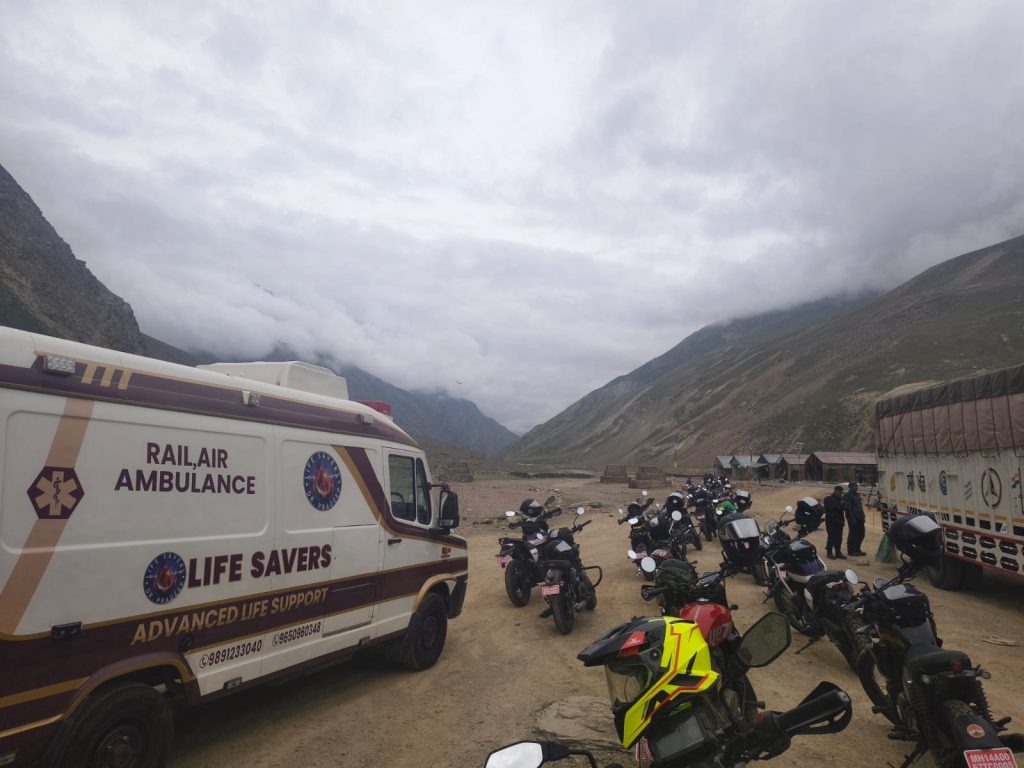
Rail Ambulance from Kolkata to Sir Ganga Ram Hospital, Delhi: Full ICU Transfer for a DVT Patient with History of Pulmonary Embolism
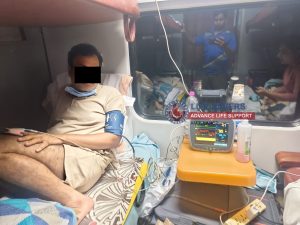
There is one rule that overrides everything else when you are transporting a patient with deep vein thrombosis and a history of pulmonary embolism: the patient does not stand up. Not at the house. Not at the railway station platform. Not to use the washroom on the train. Not at any point between the bed they leave in Kolkata and the bed they arrive at in Sir Ganga Ram Hospital, Delhi. One moment of weight-bearing, one shift in position that compresses the wrong vein at the wrong time, and a clot that has been sitting in the deep veins of the leg can break loose, travel to the lungs, and cause another pulmonary embolism. This patient had already survived two to three of those episodes. The family and the medical team were not interested in risking a fourth one inside a railway station.
That is the context in which Life Savers Ambulance was called to arrange a full ICU rail ambulance from Kolkata to Delhi, with a critical care doctor onboard, a ventilator on standby, 2-litre continuous oxygen, and absolute bed-to-bed transport with zero patient mobilisation at any point in the journey.
Why This Case Required a Critical Care Doctor, Not Just a Paramedic
Most of the rail ambulance transfers we handle are managed by experienced paramedics, and for stable patients that is clinically appropriate. This case was different, and the family was right to insist on a critical care doctor travelling with the patient.
Deep vein thrombosis with recurrent pulmonary embolism is not a stable condition in the way that a recovering stroke or a post-surgical patient might be. The underlying clot burden means that the patient is at continuous risk of a new embolic event. Pulmonary embolism can present suddenly, with acute breathlessness, a sharp drop in oxygen saturation, chest pain, tachycardia, or in severe cases, cardiovascular collapse. When that happens, the response window is minutes, not hours. A paramedic is trained to recognise these signs and initiate basic life support, but the clinical decision-making that follows, including whether to administer thrombolytics, how to manage acute right heart failure, whether to escalate to invasive airway management, requires a physician with critical care training.
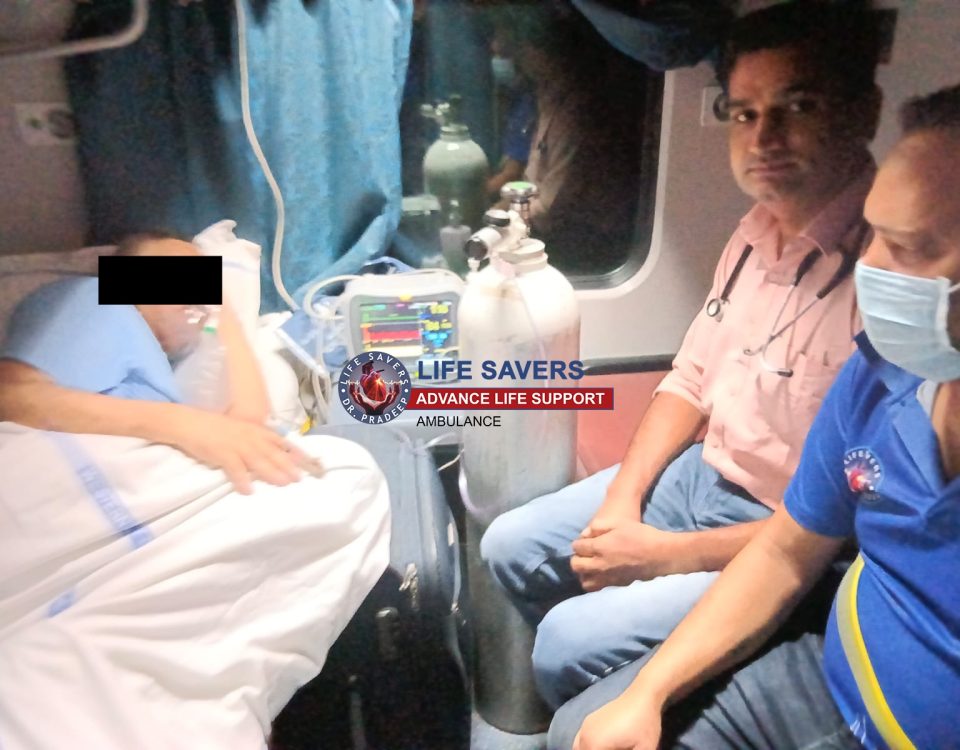
Our onboard critical care doctor for this transfer was briefed on the full case history before departure. He reviewed the patient's DVT imaging, previous PE episodes, current anticoagulation regimen, baseline vitals, and the specific risk factors that made this transfer higher-risk than a standard ICU case. He carried a documented escalation protocol that covered every foreseeable scenario between Kolkata and Delhi, including what to do if the patient needed emergency medical offloading at an intermediate station.
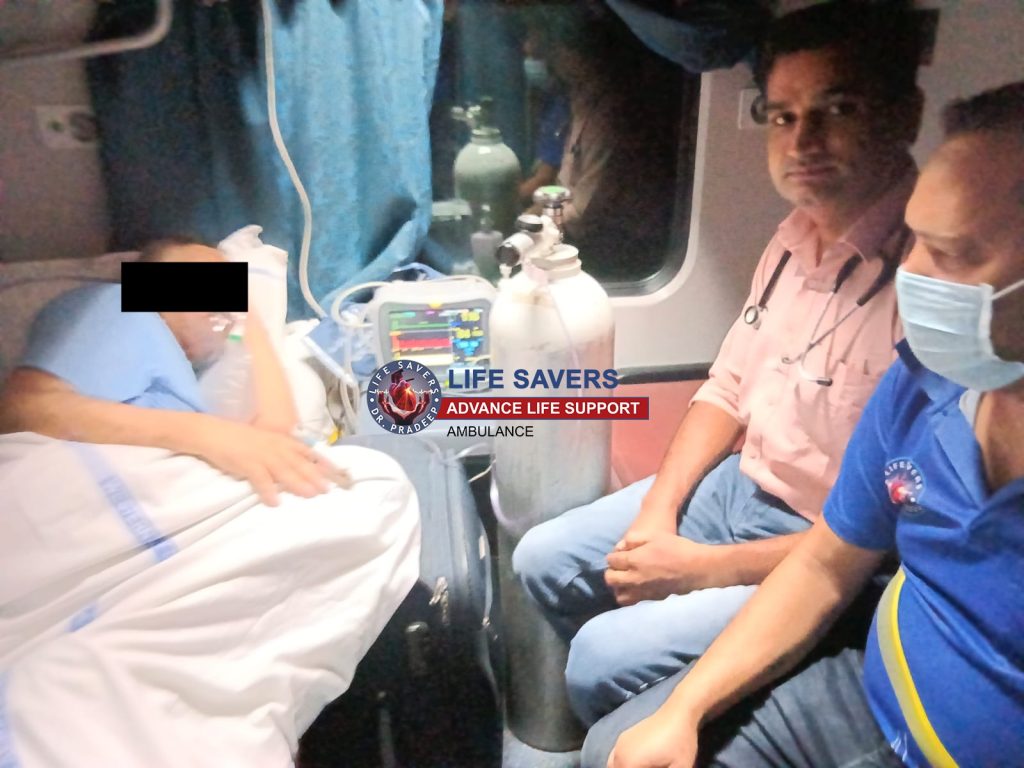
The paramedic was also onboard, handling continuous monitoring, medication administration, oxygen management, and patient care under the doctor's supervision. The doctor's role was not to replace the paramedic but to add a layer of clinical judgment that a DVT-PE case demands.
What Complete Bed-to-Bed Transport Actually Means
"Bed-to-bed transport" is a phrase many ambulance services use. For most patients, it means the patient is on a stretcher for most of the journey. For a DVT patient with recurrent pulmonary embolism, it means something far more specific and far more carefully executed.
The patient was placed on a medical stretcher at their location in Kolkata. That stretcher was loaded into the ground ambulance. The ground ambulance drove to the railway station. At the station, the stretcher was transferred from the ambulance directly onto a platform trolley and wheeled to the train, where it was loaded into the reserved AC first-class coupe. At no point did the patient sit up, stand, pivot, or bear weight on their legs. The same discipline applied on arrival in Delhi. The stretcher came off the train, went onto the platform trolley, into the waiting ground ambulance, and into Sir Ganga Ram Hospital, where the patient was transferred onto a hospital bed under the supervision of the receiving medical team.
Every transition point, from ambulance to platform to train to platform to ambulance to hospital, was pre-planned and staffed. Our ground teams at Howrah and New Delhi stations are experienced in stretcher logistics for patients who cannot be mobilised, and they know the platform layouts, lift access points, and ramp routes that eliminate any need for the patient to be tilted or jostled unnecessarily.
This level of discipline exists for a clinical reason. In a DVT patient, the deep veins of the legs contain clots. Physical movement, especially weight-bearing, muscle contraction in the calves, or sudden changes in position, can mechanically dislodge these clots. Once a clot fragment enters the venous circulation and reaches the pulmonary arteries, you have a pulmonary embolism. The patient had already experienced this two to three times. The entire transfer protocol was designed around one principle: do not let it happen again.
The Full ICU Rail Ambulance Setup
The full ICU configuration for this case went beyond the semi-ICU setups we use for stable oxygen-dependent or catheterised patients. Here is what was inside the coupe for this Kolkata to Delhi journey.
A portable ventilator was onboard on standby. The patient was breathing independently on 2-litre continuous oxygen through a nasal cannula and did not require mechanical ventilation at the time of transfer. But the ventilator was there because a massive pulmonary embolism can cause acute respiratory failure within minutes. If the patient's oxygen saturation crashed and nasal oxygen could not maintain it, the doctor needed the ability to intubate and ventilate without waiting for the train to reach a station. This is the difference between a semi-ICU and a full ICU rail ambulance. The semi-ICU can monitor and medicate. The full ICU can take over breathing.
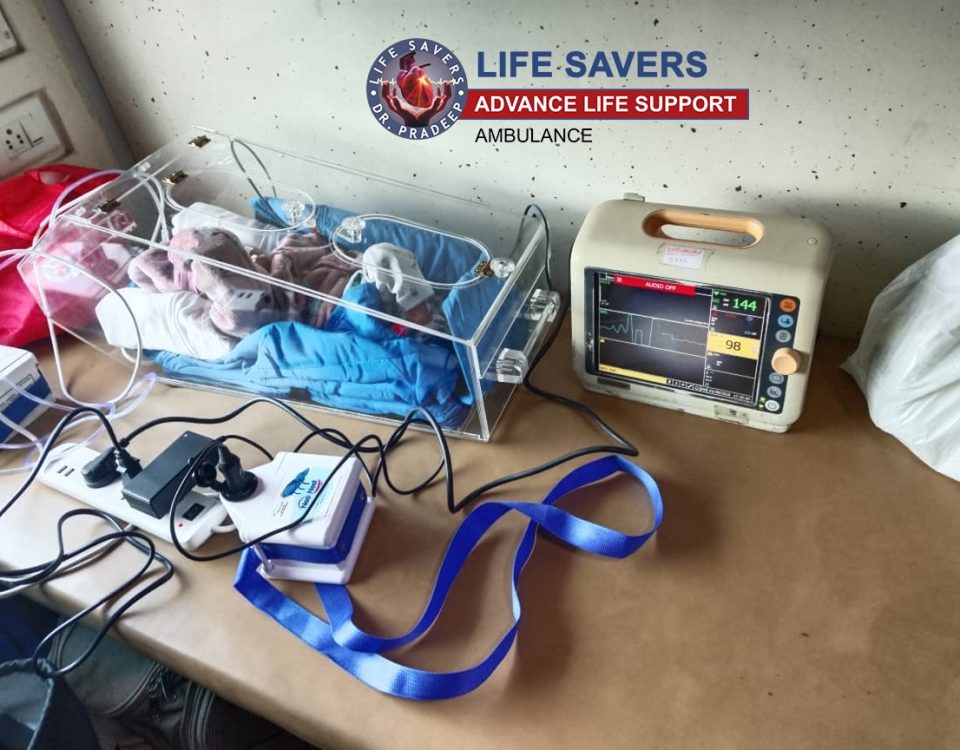
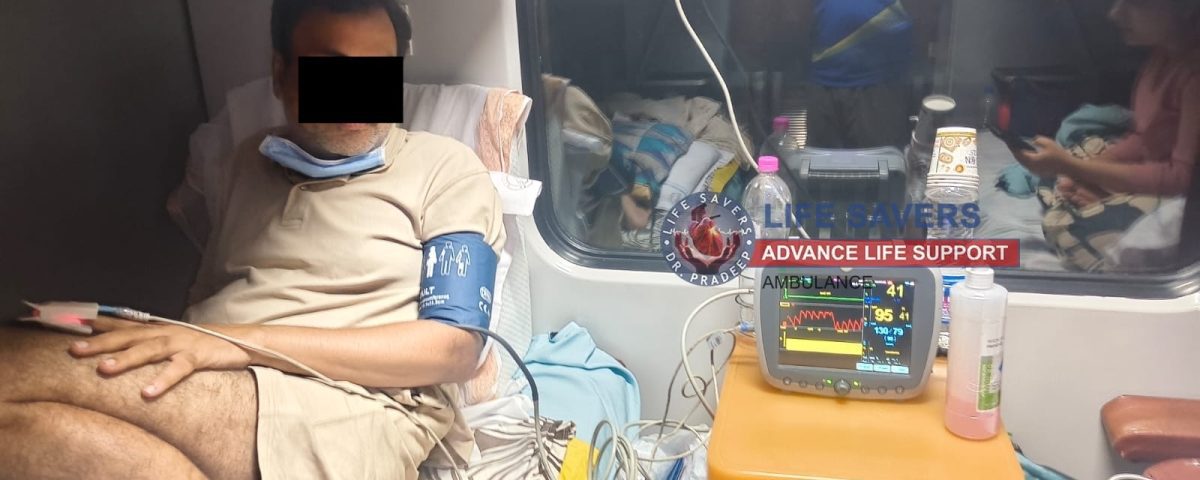
The cardiac monitor provided continuous real-time tracking of heart rate, blood pressure, SpO2, respiratory rate, and ECG waveform. The ECG capability was specifically important for this case because changes in the right heart strain pattern on the ECG can be an early indicator of a new pulmonary embolism, sometimes appearing before the patient even becomes symptomatic. The doctor monitored for these changes throughout the journey.
The oxygen delivery system was configured for 2-litre continuous flow with enough cylinder capacity to sustain this rate for the full journey plus a delay buffer. For a Kolkata to Delhi rail journey of approximately 17 to 20 hours, that means carrying a significant volume of medical-grade oxygen. Backup cylinders were loaded and checked before departure.
The emergency drug kit for this case was more extensive than what a semi-ICU transfer carries. It included anticoagulants for managing any change in the patient's clotting status, thrombolytics that the doctor could administer if a new PE occurred and met the clinical criteria for clot-dissolving therapy, vasopressors for blood pressure support in case of haemodynamic collapse, sedation and intubation medications in case mechanical ventilation became necessary, and standard emergency medications including atropine, adrenaline, and amiodarone.
A portable suction unit, IV infusion setup, and urinary catheter management supplies completed the configuration.
How the Transfer Was Coordinated
The coordination for this case involved three teams and two cities, and it started several days before the travel date.
Our medical coordination team first spoke with the treating physicians in Kolkata to get the full clinical picture. The critical details were the current DVT status including the location and extent of clots as shown on the most recent Doppler ultrasound, the history and severity of the previous pulmonary embolism episodes, the patient's current anticoagulation therapy and INR levels, baseline oxygen requirement and whether 2 litres had been stable or was a recent escalation, and any cardiac involvement or right ventricular strain already present. This information determined the ICU configuration, the drug kit contents, and the escalation protocol the doctor would follow during transit.
Separately, we coordinated with Sir Ganga Ram Hospital in Delhi to confirm the expected arrival window so that the receiving team would be ready. For a DVT-PE patient arriving by rail ambulance, the hospital needs to have a bed ready in the appropriate ward or ICU, not in a general admission queue. We provided SGRH with the clinical transit plan and the doctor's contact number so the receiving team could call during the journey if they needed to adjust the admission preparation based on any changes in the patient's condition en route.
On the logistics side, our team secured the AC first-class coupe on a Kolkata to Delhi Rajdhani or superfast service. Coupe selection for a full ICU case accounts for the equipment footprint, which is larger than a semi-ICU setup because of the ventilator and additional oxygen cylinders. The train and departure time were chosen to align with the patient's medication schedule and the critical care doctor's availability.
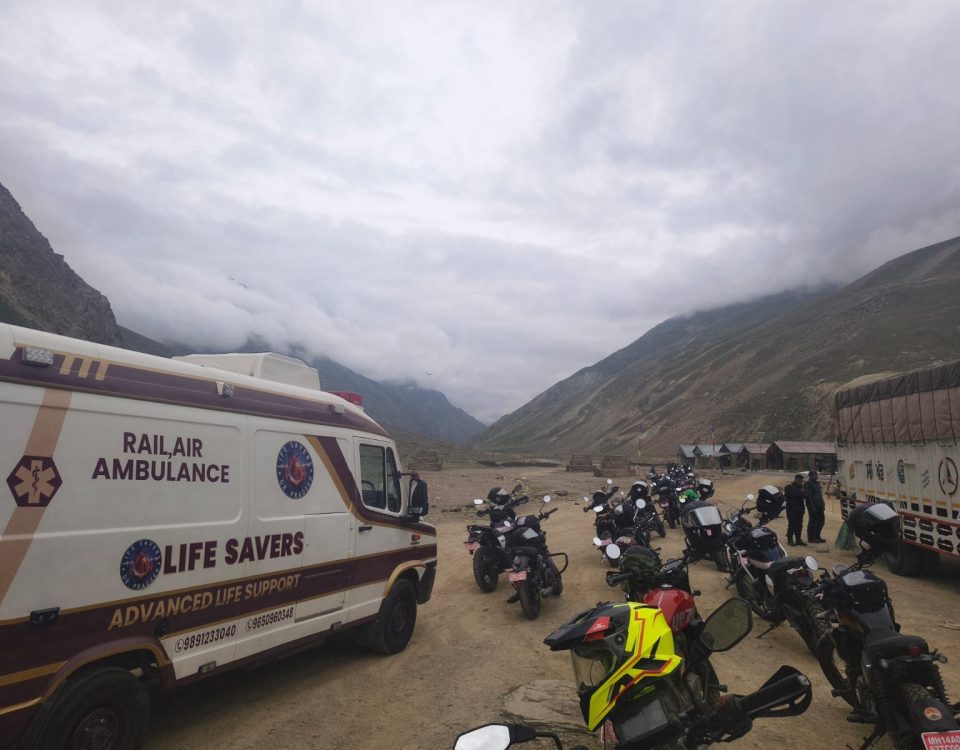
Ground ambulance pickup from the patient's location in Kolkata was handled by our advanced life support ambulance, not a basic vehicle. The patient was on continuous monitoring from the moment our team took over care at the Kolkata end. A second advanced life support ambulance was staged at New Delhi railway station for the final transfer to Sir Ganga Ram Hospital on Rajinder Nagar road.
Kolkata to Delhi: Route and Logistics for Families
The Kolkata to Delhi rail corridor is one of Indian Railways' trunk routes, with Rajdhani Express services covering the approximately 1,450 kilometres in 17 to 18 hours and other superfast trains taking 20 to 24 hours. Trains depart from Howrah station in
Kolkata, and our ground team handles all station logistics at Howrah including stretcher loading, platform navigation, and coupe setup.On the Delhi side, trains arrive at New Delhi Railway Station. Sir Ganga Ram Hospital is located on Sir Ganga Ram Hospital Marg near Rajinder Nagar, roughly 4 to 5 kilometres from the station. Our ground ambulance covers this last leg in about 15 to 20 minutes depending on traffic, with the full ICU monitoring continuing throughout.
We pick up from any location in Kolkata, Howrah, Salt Lake, or surrounding areas. If the patient is being discharged from a hospital in Kolkata, we coordinate directly with the hospital's discharge and ambulance bay teams.
What Families of DVT Patients Need to Understand About Long-Distance Transfers
If your family member has been diagnosed with deep vein thrombosis and has a history of pulmonary embolism, the transfer itself is a medical procedure, not just a logistics problem. The difference between a safe transfer and a dangerous one comes down to three things.
First, the patient must not be mobilised. This is not a preference or a precaution. It is a clinical requirement. Any ambulance service that asks a DVT-PE patient to sit in a wheelchair at the station, or to walk a few steps to the train, or to shift themselves onto a berth, does not understand the condition they are dealing with. Complete bed-to-bed stretcher transport with zero weight-bearing is non-negotiable. Second, a critical care doctor must be present for a patient with recurrent PE history.
The complications that can arise during transit, specifically a new pulmonary embolism, are not manageable by a paramedic alone. The clinical decisions involved, including whether to anticoagulate more aggressively, whether to thrombolyse, whether to intubate, require physician-level judgment in real time.
Third, a ventilator must be onboard even if the patient is currently breathing on their own. Pulmonary embolism can cause sudden respiratory failure. If that happens 8 hours into a 17-hour train journey, the ability to mechanically ventilate is the difference between stabilising the patient and losing them.
These are not upsells. They are the minimum standard of care for this patient profile. If an ambulance service quotes you for a DVT-PE transfer without mentioning any of these three things, ask why.
Frequently Asked Questions
Book a Full ICU Rail Ambulance from Kolkata to Delhi
If your family member has deep vein thrombosis, a history of pulmonary embolism, or any condition that requires a critical care doctor during transit, call Life Savers Ambulance. We provide full ICU rail ambulance transfers with physician escort, ventilator capability, advanced monitoring, and complete bed-to-bed transport across India.
We will review your case with our medical team, coordinate with your treating hospital and the receiving hospital, and give you a complete transfer plan with transparent pricing.
Life Savers Ambulance provides rail ambulance, road ambulance, and air ambulance services across India with semi-ICU and full ICU configurations. Every critical care transfer includes a physician or trained paramedic, clinical-grade equipment, and end-to-end coordination from hospital discharge to destination admission.