NICU Road Ambulance from Rainbow Hospital, Delhi to Agra: Transferring a 2-Day-Old Newborn on Ventilator and Noradrenaline Support
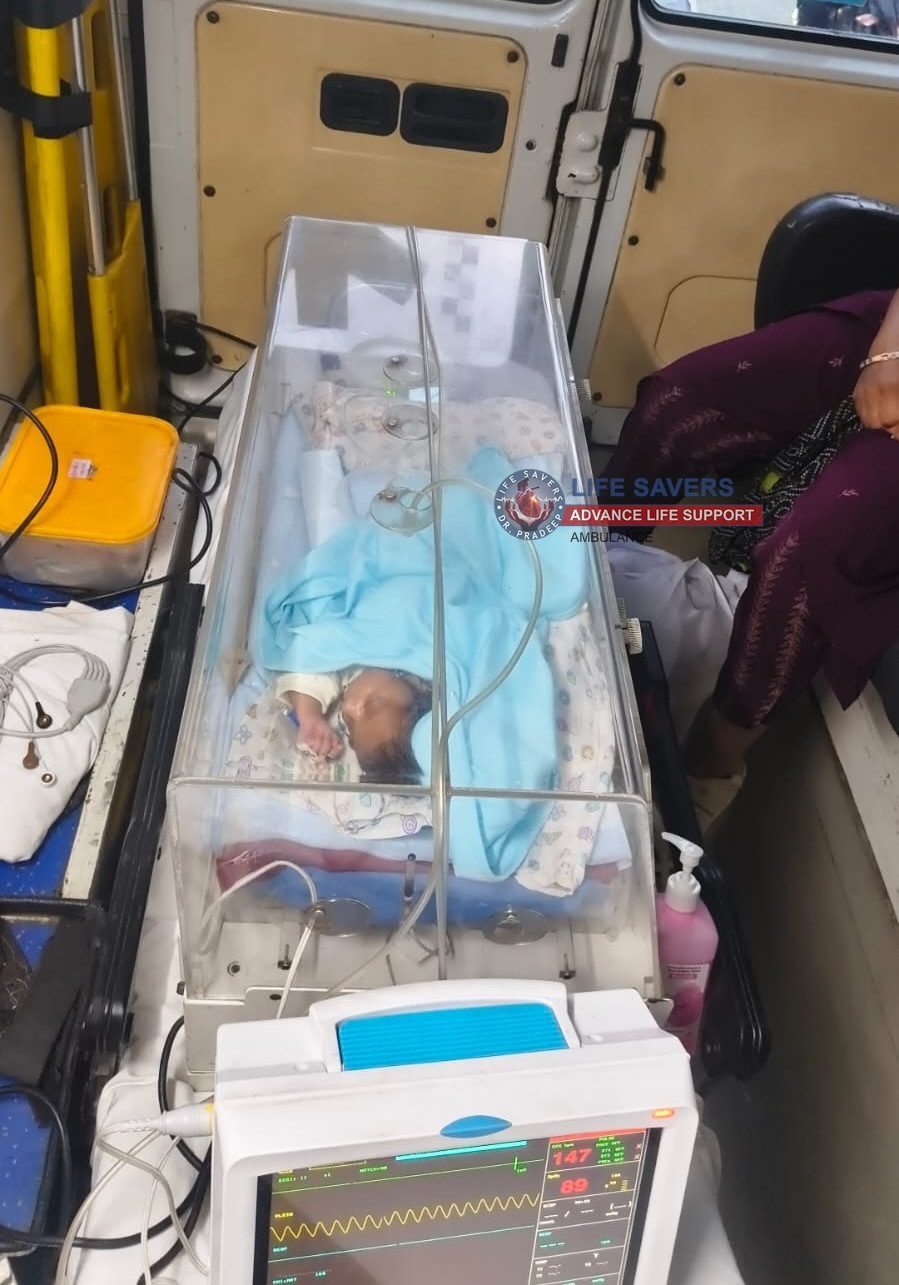
A baby who is two days old, on a ventilator because their lungs cannot sustain breathing independently, and on a noradrenaline drip because their blood pressure is too low to maintain organ perfusion without pharmacological support, is not a patient you transfer unless you absolutely have to. The decision to move this baby from Rainbow Children's Hospital in Delhi to a facility in Agra was not made casually. It was made because the family needed the child closer to home for ongoing NICU care, and the treating neonatologist at Rainbow cleared the transfer only after confirming that the baby could tolerate the journey with the right medical team and equipment in place.
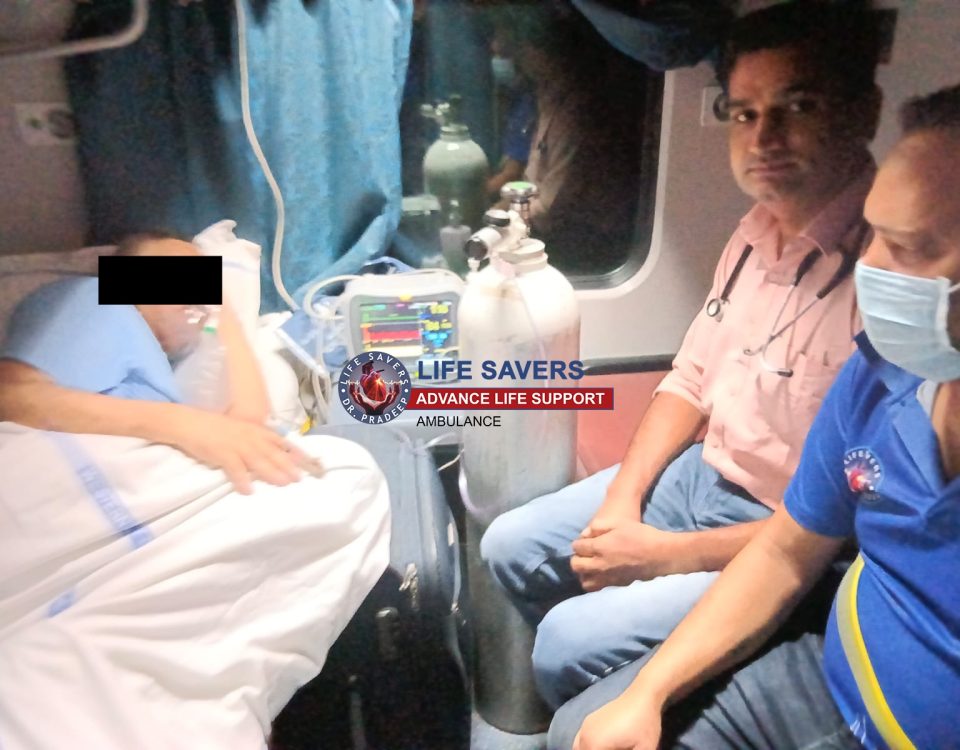
Life Savers Ambulance provided a dedicated NICU road ambulance for this transfer. A neonatologist and a trained male paramedic accompanied the baby for the entire journey from Delhi to Agra, managing the ventilator, the noradrenaline infusion, and every other aspect of this newborn's critical care without interruption for a single moment of the roughly four-hour drive.
What Makes Neonatal Transport Different from Every Other Kind of Patient Transfer
Everything about moving a critically ill newborn is different from adult patient transport, and the differences are not minor. They are fundamental.
A 2-day-old baby weighs somewhere between two and four kilograms. The margin for error in every single clinical parameter is razor-thin. An adult patient's blood pressure can fluctuate by 10 or 15 points and remain clinically acceptable. In a neonate on noradrenaline support, a blood pressure swing of even a few points can mean the difference between adequate organ perfusion and the beginning of end-organ damage. The noradrenaline infusion rate has to be precise, monitored continuously, and adjusted in real time based on the baby's mean arterial pressure. There is no room for "close enough."
The ventilator settings for a newborn are not scaled-down versions of adult settings. Neonatal ventilation operates at tidal volumes measured in millilitres, not the hundreds of millilitres used in adult ventilation. The pressures are lower, the rates are often higher,and the consequences of even a small miscalibration are immediate. Too much pressure and you risk a pneumothorax, a collapsed lung, in a baby whose lungs may already be compromised. Too little support and oxygen levels drop within seconds, not minutes. The ventilator used in a NICU ambulance is a neonatal-specific device, not an adult portable ventilator with a paediatric adapter.
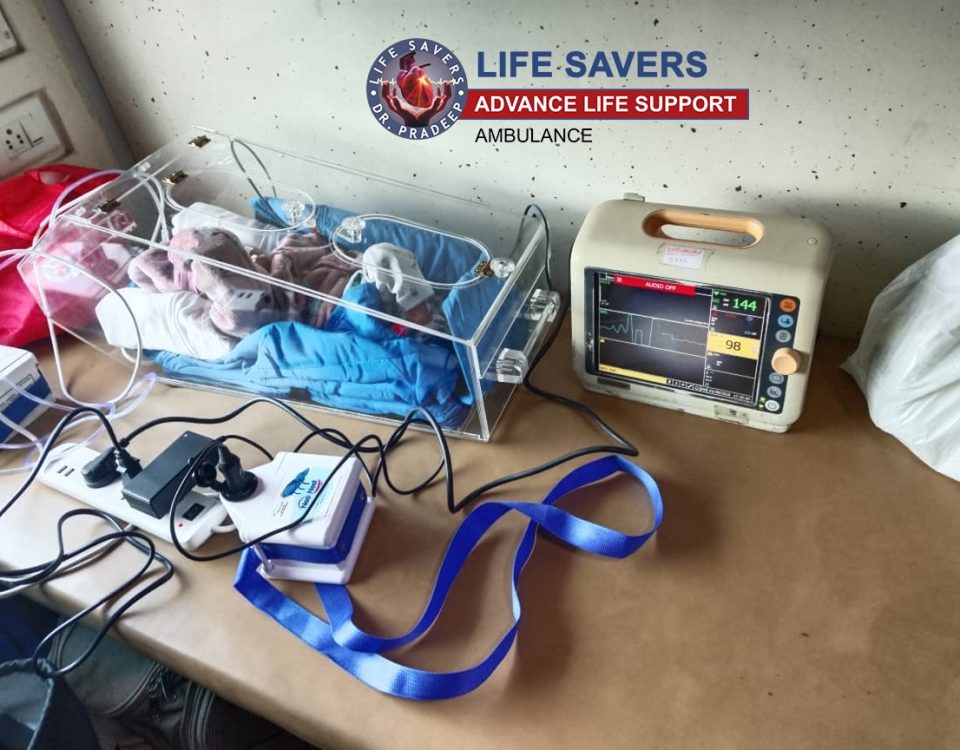
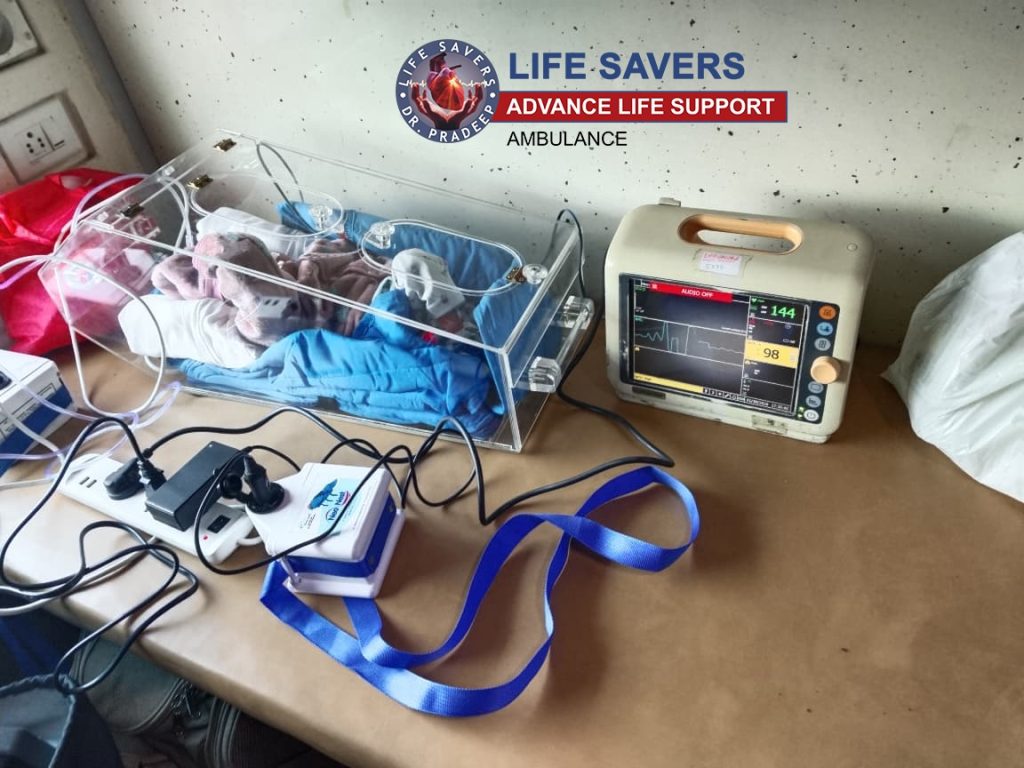
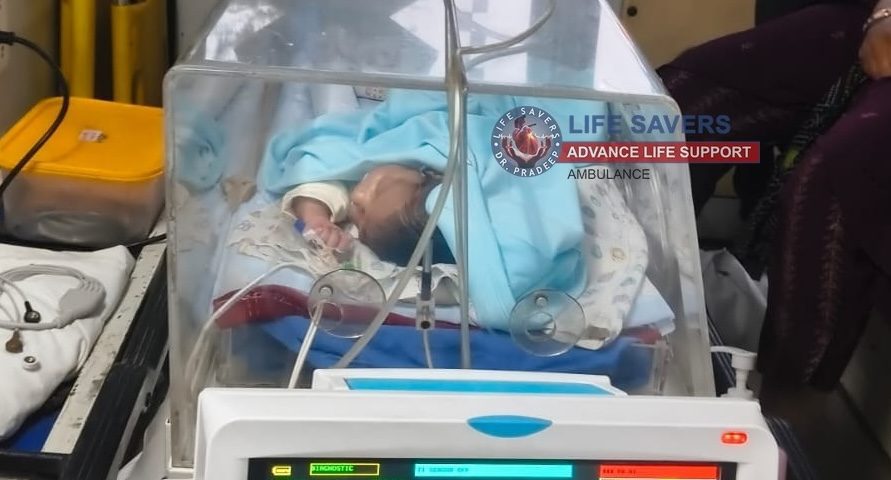
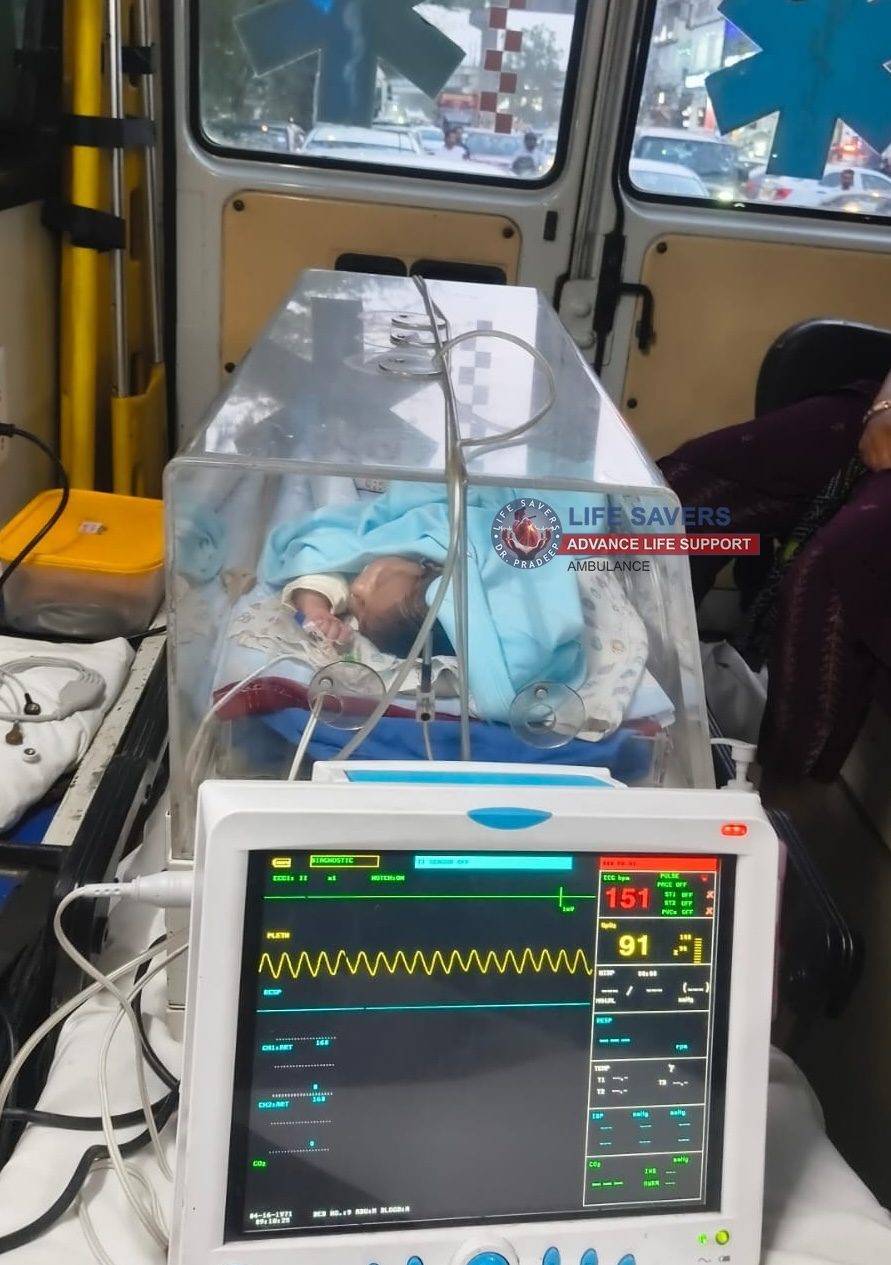
Temperature regulation is another dimension that adult transport does not deal with in the same way. A 2-day-old baby cannot maintain body temperature independently. Hypothermia in a neonate is not discomfort. It causes metabolic acidosis, increases oxygen consumption, worsens respiratory distress, and can destabilise the very blood pressure that the noradrenaline is working to maintain. The baby was transported inside a transport incubator, which is a temperature-controlled, enclosed unit that maintains a stable thermal environment throughout the journey. The incubator also provides a controlled space for the ventilator circuit and IV lines, reducing the risk of accidental disconnection or contamination.
And then there is the simple physical reality of working on a patient this small inside a moving vehicle. Every IV line, every monitoring lead, every ventilator tube is miniature. Securing them so that road vibration and vehicle movement do not dislodge anything requires a level of preparation and vigilance that is qualitatively different from adult transport. The paramedic and neonatologist were not simply watching a monitor for the duration of the drive. They were hands-on with the baby throughout, checking connections, adjusting positioning, and responding to the continuous stream of data from the neonatal monitor.
Why a Neonatologist, Not Just Any Doctor
The family did not request a neonatologist because they wanted a premium service. A neonatologist was on this ambulance because no other type of doctor is qualified to manage what this baby needed during transit.
Noradrenaline is a vasopressor. It is a powerful drug that directly affects the cardiovascular system, and in a neonate, titrating it correctly requires specialised training and experience. The dose adjustments are made in micrograms per kilogram per minute. Getting the math wrong by even a small margin in a patient who weighs less than four kilograms has consequences that a general physician or even a general paediatrician is not trained to manage. A neonatologist does this daily. It is the core of their clinical practice.
The ventilator management is the same story. Neonatal ventilation strategies, including the decision of when to adjust FiO2, when to change PEEP, when to suction theendotracheal tube, and how to interpret blood gas values in a newborn, are subspecialty skills. A critical care doctor trained in adult medicine would not be the right person to make these calls for a 2-day-old baby. The physiology is different. The pathology is different. The drug dosing is different. The equipment is different.
Our neonatologist for this case reviewed the baby's complete medical record before departure, including the birth history, Apgar scores, initial NICU course, ventilator settings, noradrenaline dose and trend, most recent blood gas, and any imaging. He carried a written protocol agreed upon with the Rainbow Hospital NICU team that specified the target ranges for blood pressure, oxygen saturation, temperature, and ventilator parameters during transit, and the specific interventions to perform if any of these drifted outside the target range.
The male paramedic worked alongside the neonatologist, handling the moment-to-moment monitoring, managing the oxygen cylinders and suction equipment, documenting vitals at fixed intervals, and assisting with any hands-on procedures. For neonatal transport, this two-person team is the minimum safe staffing. One person cannot simultaneously manage a ventilated neonate on vasopressors, document clinical observations, and troubleshoot equipment issues in a moving vehicle.
What the NICU Road Ambulance Carried
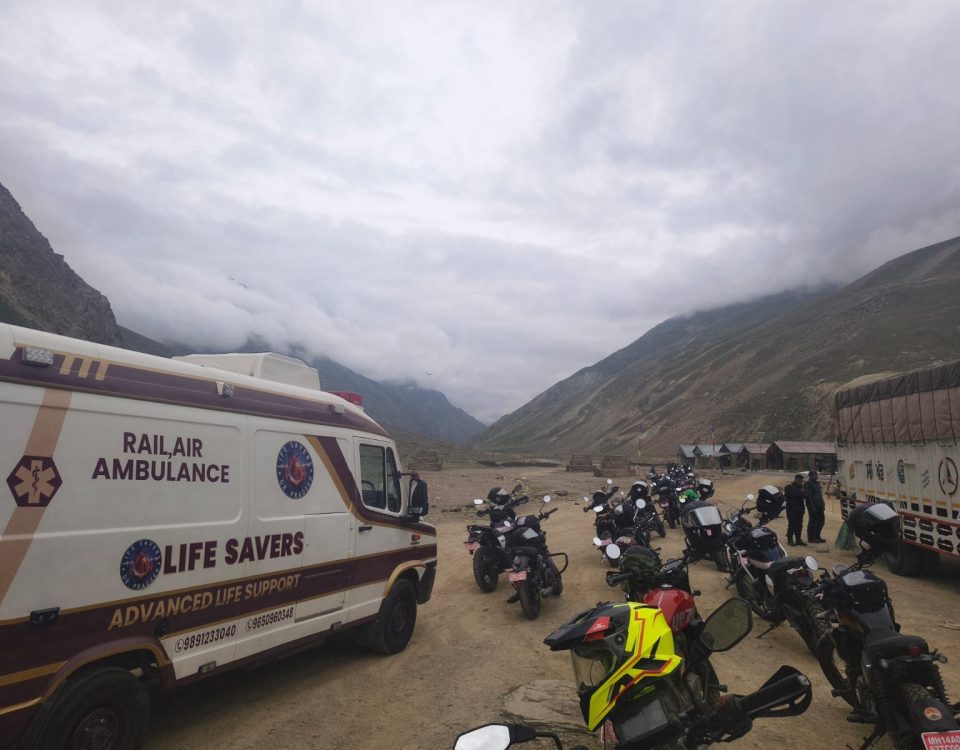
The ambulance used for this transfer was not a standard ICU ambulance with some paediatric supplies added. It was configured specifically for neonatal critical care transport.
The transport incubator maintained a stable temperature environment for the baby throughout the four-hour journey. It was pre-warmed before the baby was placed inside and monitored continuously by the built-in temperature display. The incubator also served as the baby's protected workspace, keeping the ventilator circuit, IV lines, and monitoring leads organised and secure against movement.
The neonatal ventilator was a transport-grade device designed for newborns, capable of delivering the precise tidal volumes and pressures that a 2-day-old requires. It ran on the ambulance's medical-grade oxygen supply with backup cylinders calculated to cover the full journey plus a delay buffer. The ventilator alarmed for any deviation from the set parameters, including disconnection, pressure changes, or flow interruption.
The syringe pump delivering the noradrenaline infusion was a precision device calibrated for neonatal flow rates. Vasopressor delivery in neonates is measured in fractions of millilitres per hour. The pump alarmed for occlusion, air in line, andcompletion. A backup syringe with the same drug concentration was prepared and ready in case the primary line failed or the infusion needed to be restarted.
The neonatal cardiac monitor tracked heart rate, blood pressure (via an arterial line or non-invasive cuff depending on the baby's access), oxygen saturation, and respiratory rate continuously. The alarm thresholds were set to the target ranges agreed with the Rainbow Hospital team before departure.
The emergency kit included neonatal resuscitation equipment, neonatal-dose emergency medications including adrenaline, atropine, sodium bicarbonate, and surfactant if indicated, a bag-mask resuscitation device sized for newborns, and intubation equipment in neonatal sizes. If the endotracheal tube dislodged during transit, the neonatologist had everything needed to re-intubate within the ambulance without waiting to reach a hospital.
How the Transfer Was Managed from Rainbow Hospital to Agra
The coordination began with a clinical conversation between our neonatologist and the treating team at Rainbow Children's Hospital in Delhi. This was not a phone call to collect paperwork. It was a doctor-to-doctor handover where every clinical detail that could affect the baby's stability during a four-hour road journey was discussed, questioned, and documented.
The specific details that mattered included the baby's current ventilator settings and how stable they had been over the preceding 12 to 24 hours, the noradrenaline dose and whether it had been weaned, stable, or escalating, the most recent arterial blood gas values, the baby's fluid balance and glucose levels (neonatal hypoglycaemia during transport is a real and preventable risk), and any specific concerns the Rainbow team had about the journey.
Based on this handover, our neonatologist finalised the transport settings and escalation protocol. The protocol specified what to do if oxygen saturation dropped below target, what to do if blood pressure fell despite the current noradrenaline dose, what to do if the ventilator circuit disconnected, and the decision criteria for diverting to the nearest hospital with a NICU if the baby's condition deteriorated beyond what could be managed inside the ambulance.
On the day of transfer, the NICU ambulance arrived at Rainbow Hospital with the incubator pre-warmed and all equipment tested. The baby was transferred from the hospital NICU to the transport incubator under the direct supervision of both theRainbow NICU team and our neonatologist. This handover moment, when the baby moves from a hospital bed to a transport incubator, is the highest-risk point of any neonatal transfer. Ventilator circuits are switched. Monitoring leads are reconnected. IV lines are transferred to portable pumps. Our team and the hospital team performed this together, verifying every connection before the baby left the unit.
The drive from Rainbow Hospital in Delhi to Agra is approximately 200 to 230 kilometres and takes about three and a half to four hours depending on traffic and road conditions. The ambulance driver for neonatal transfers is specifically briefed to drive smoothly, avoiding sudden acceleration, hard braking, and rough road patches wherever possible. For a baby on a ventilator with lines and tubes, road jolts are not just uncomfortable. They can dislodge an endotracheal tube or pull an IV cannula, either of which is a genuine emergency in a patient this size.
Throughout the drive, the neonatologist and paramedic maintained continuous monitoring. Vitals were documented every 15 minutes. The noradrenaline infusion rate was checked and confirmed at each documentation interval. Ventilator parameters were verified against the transport protocol. The incubator temperature was monitored to ensure no drift. This clinical log was handed over to the receiving NICU team in Agra along with the baby, giving them a complete record of the baby's status during every segment of the journey.
On arrival in Agra, the baby was transferred from the ambulance directly into the receiving hospital's NICU. The same careful handover process that happened at Rainbow was repeated in reverse, with our neonatologist briefing the Agra team on the baby's transit course, any interventions performed, and any changes from the baseline clinical status.
What Parents Need to Know About NICU Ambulance Transfers
If your newborn baby is in a NICU and needs to be transferred to another hospital, whether for specialised treatment, to be closer to family, or because the current facility has recommended a higher centre, there are things you should ask any ambulance service before agreeing to the transfer.
Ask whether the ambulance has a transport incubator. Not a radiant warmer, not a blanket and a hot water bottle. A proper enclosed transport incubator with temperature control. If the answer is no, your baby should not be in that ambulance.
Ask whether a neonatologist will be onboard. Not a general paediatrician, not a general physician, not an MBBS doctor with "NICU experience." A qualified neonatologist. For a baby on ventilator support or vasopressors, this is not optional.
Ask whether the ventilator is neonatal-specific. Adult portable ventilators cannot safely ventilate a newborn. The volumes and pressures are too coarse. If the ambulance service tells you their "ICU ventilator works for all ages," that is a red flag.
Ask about oxygen capacity. A four-hour road journey with a ventilated baby consumes a significant volume of oxygen. The ambulance must carry enough to cover the full journey plus delays, with backup cylinders. Ask them to tell you the calculation. If they cannot, they have not done it.
Ask for the neonatologist's name and qualifications before the transfer, not after. You have the right to know who is responsible for your baby's care during transit.
Frequently Asked Questions
Book a NICU Ambulance Transfer
If your newborn baby needs to be transferred from one hospital to another, anywhere in India, call Life Savers Ambulance. We provide NICU road ambulance, NICU rail ambulance, and NICU air ambulance with neonatologist escort, neonatal ventilator, transport incubator, and complete monitoring for critically ill newborns.
Tell us your baby's current condition and we will have our neonatologist review the case and confirm the safest transfer plan.
Life Savers Ambulance provides neonatal, paediatric, and adult patient transfers across India via road ambulance, rail ambulance, and air ambulance. Every NICU transfer includes a qualified neonatologist, neonatal-grade equipment, and clinical coordination between sending and receiving hospitals.