ICU Rail Ambulance From Sir Ganga Ram Hospital, Delhi to Ranchi |
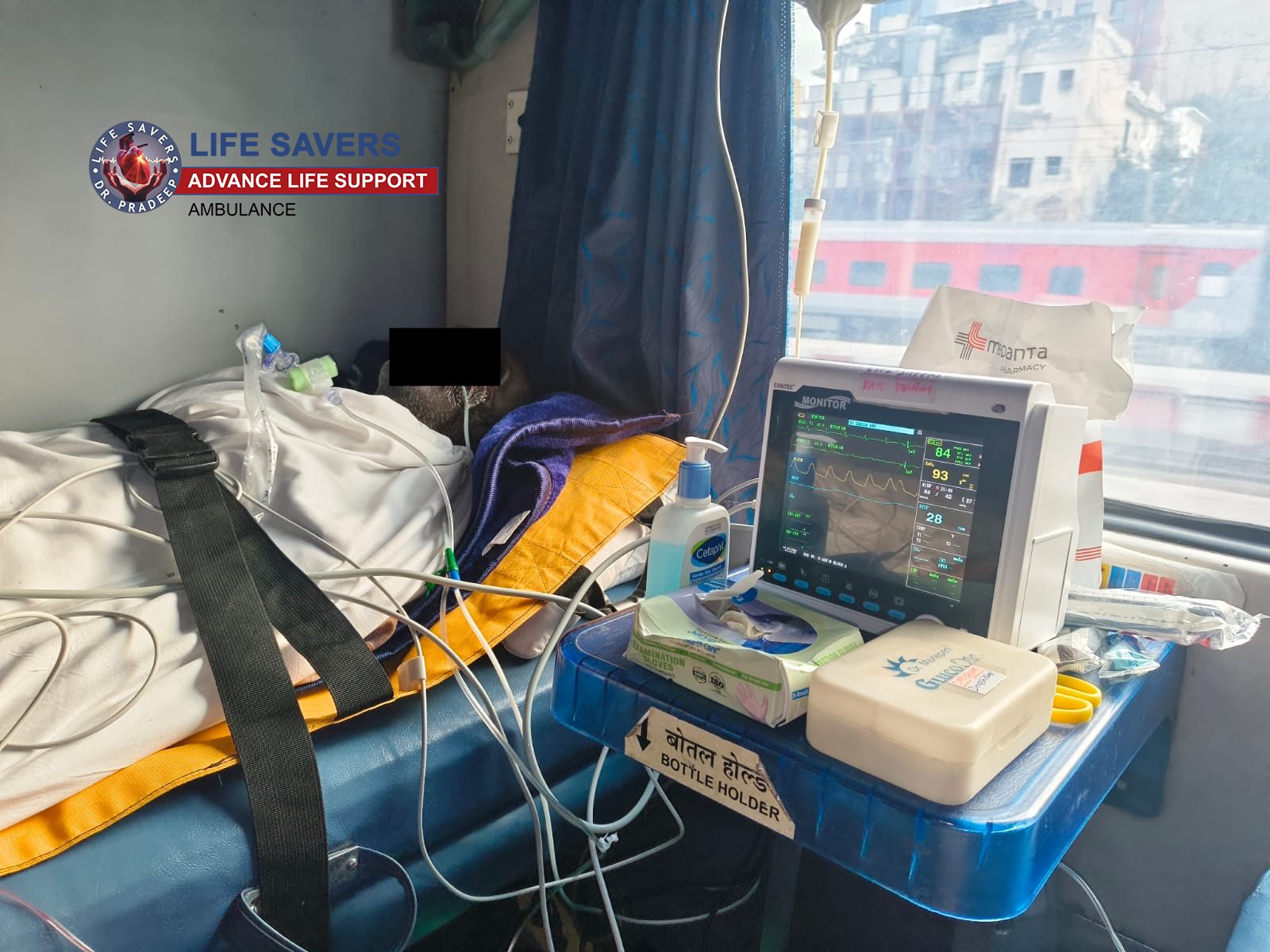
Transporting advanced oncology patients over long distances requires continuous respiratory care, secretion management, and close clinical supervision. Life Savers Ambulance Services coordinated a high-dependency train ambulance transfer, ensuring stability and dignity throughout the journey.
Case Overview
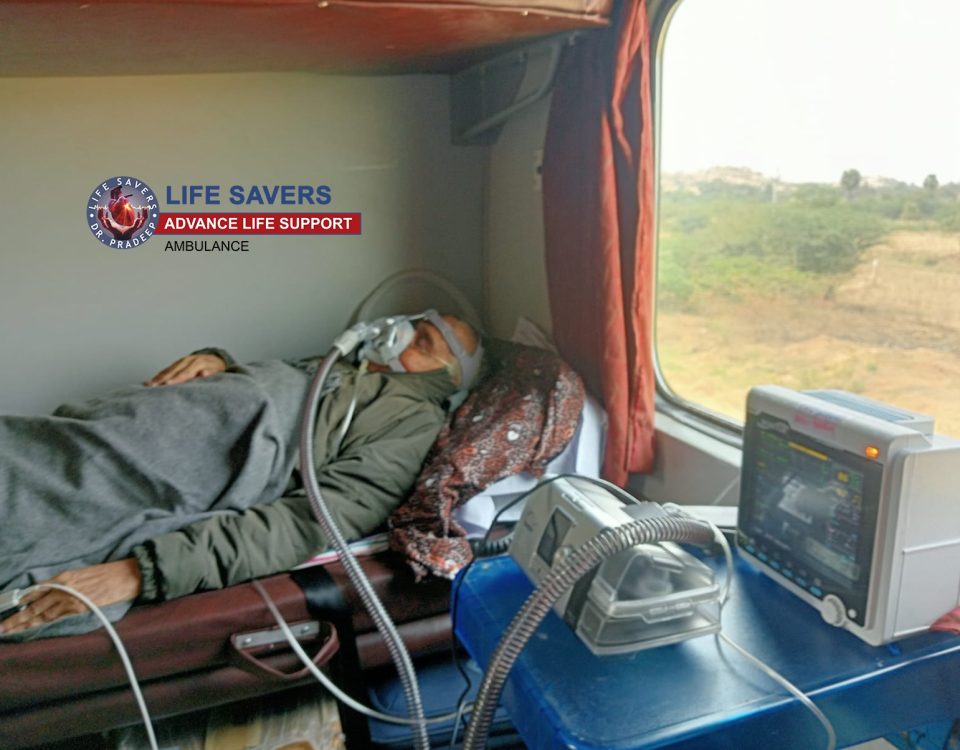
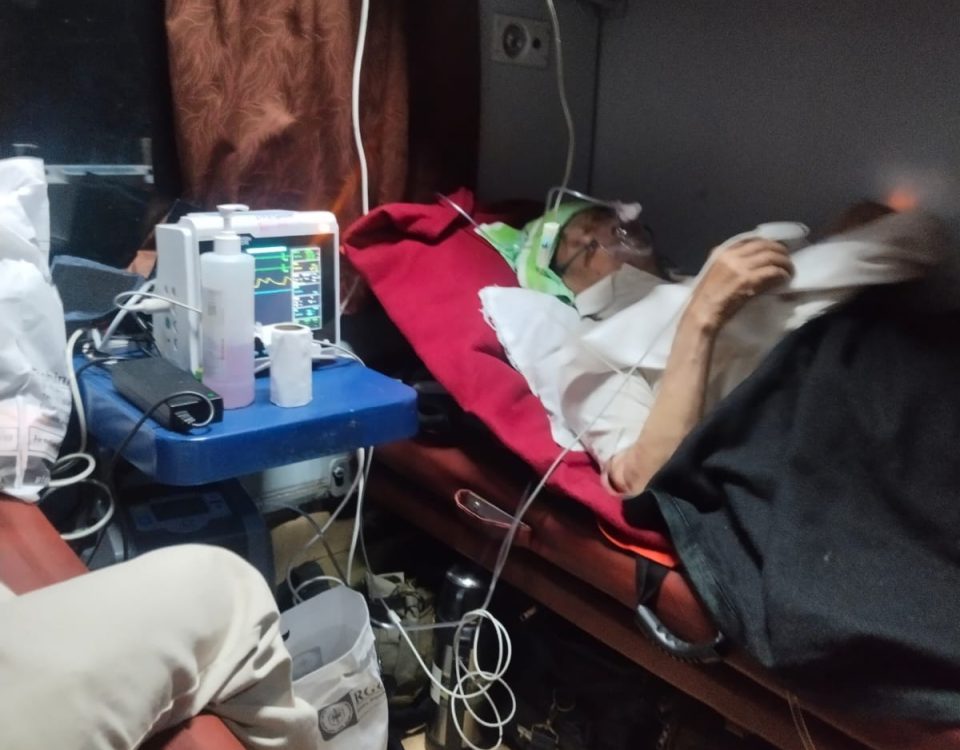
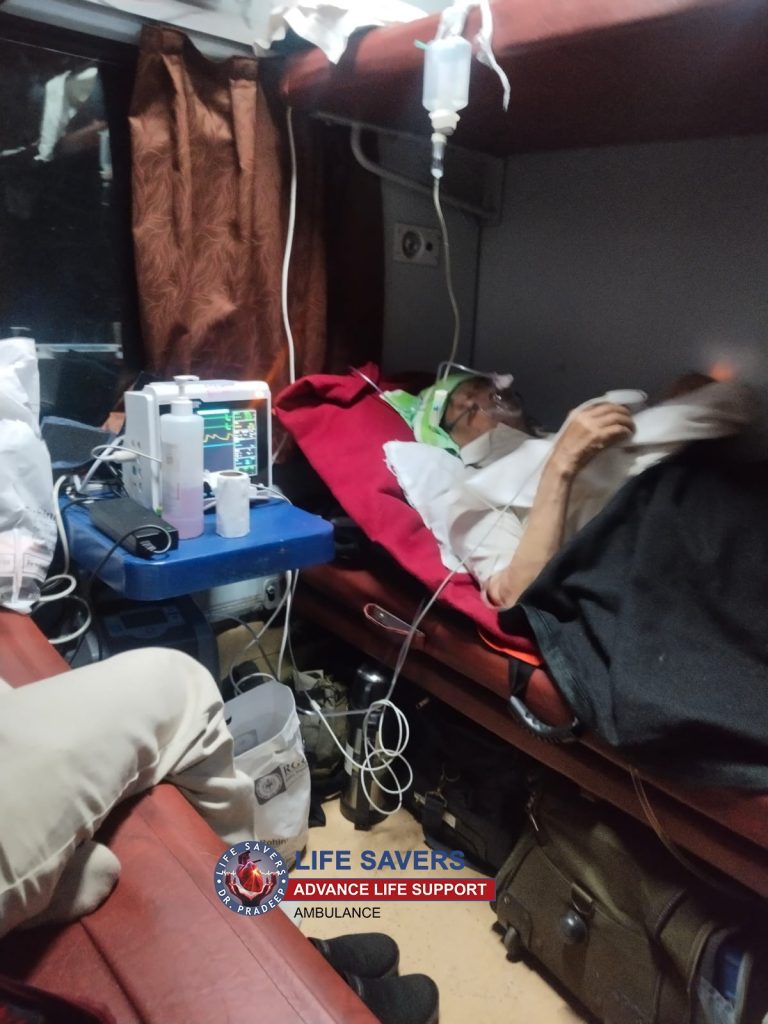
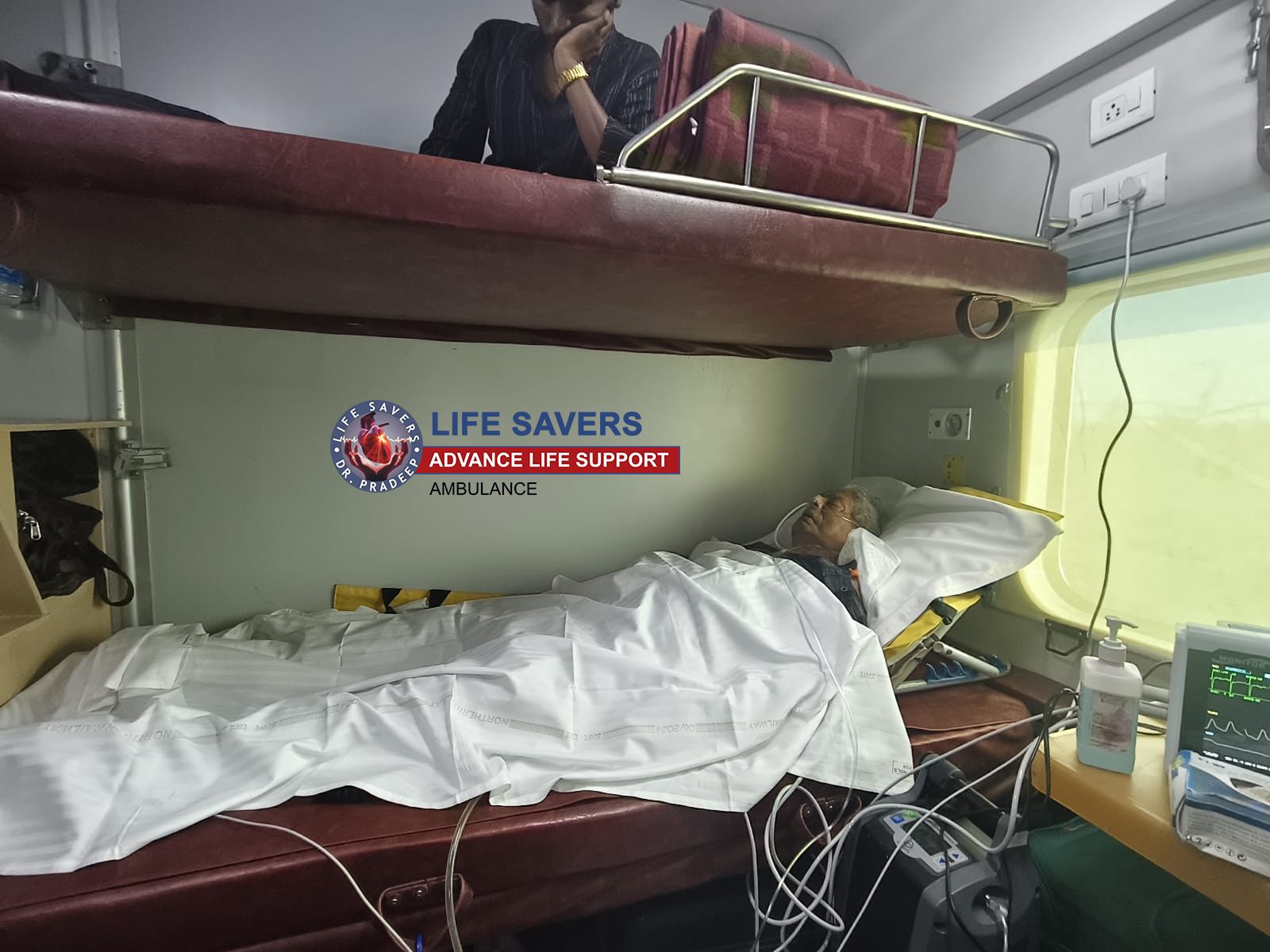
A 70-year-old male patient, a retired Justice, was shifted from Sir Ganga Ram Hospital, Delhi to Ranchi using an ICU Train Ambulance Service arranged by Life Savers Ambulance Services. The transfer was conducted as a bed-to-bed train ambulance transport, ensuring uninterrupted medical care.
Patient Condition
The patient was a known case of prostate cancer with widespread metastasis. At the time of transfer:
- He required continuous oxygen support at 3 L/min
- Had excessive respiratory secretions, requiring frequent airway clearance
- Needed suctioning approximately every 30 minutes
- Was physically weak and dependent on assisted care
Given the advanced disease and respiratory involvement, maintaining airway patency and preventing aspiration were critical during transit.
Transport Decision
An ICU Rail Ambulance Service in India was selected because:
- It provides a stable environment for long-distance transfer
- Allows continuous oxygen delivery and frequent suctioning
- Offers adequate space for ICU-level monitoring and intervention
- Ensures a controlled and dignified journey
Life Savers ensured complete coordination of the bed-to-bed transfer, including ground ambulance arrangements at both ends.
Medical Setup Onboard
The ICU Train Ambulance was equipped with:
- Continuous oxygen supply with backup
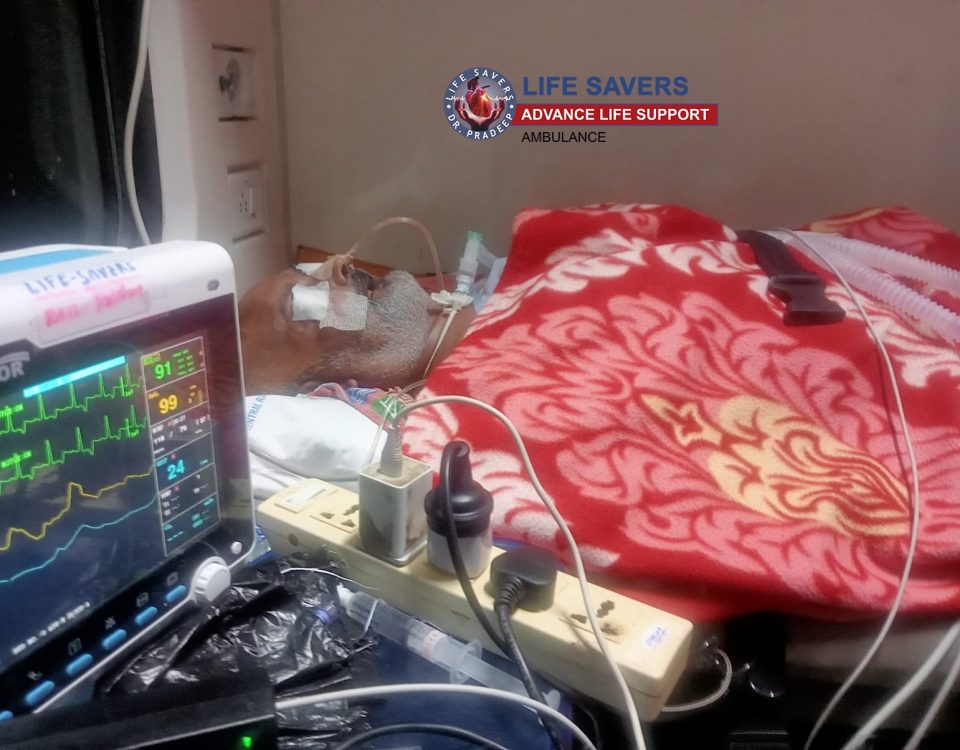
- Portable suction machine for regular airway clearance
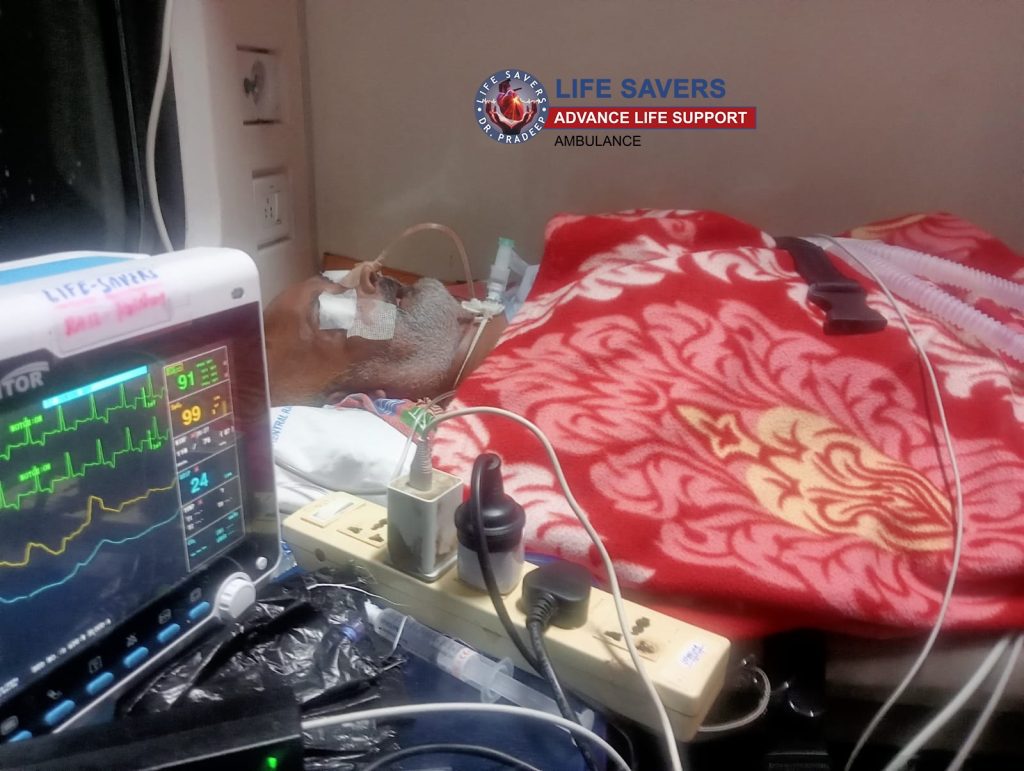
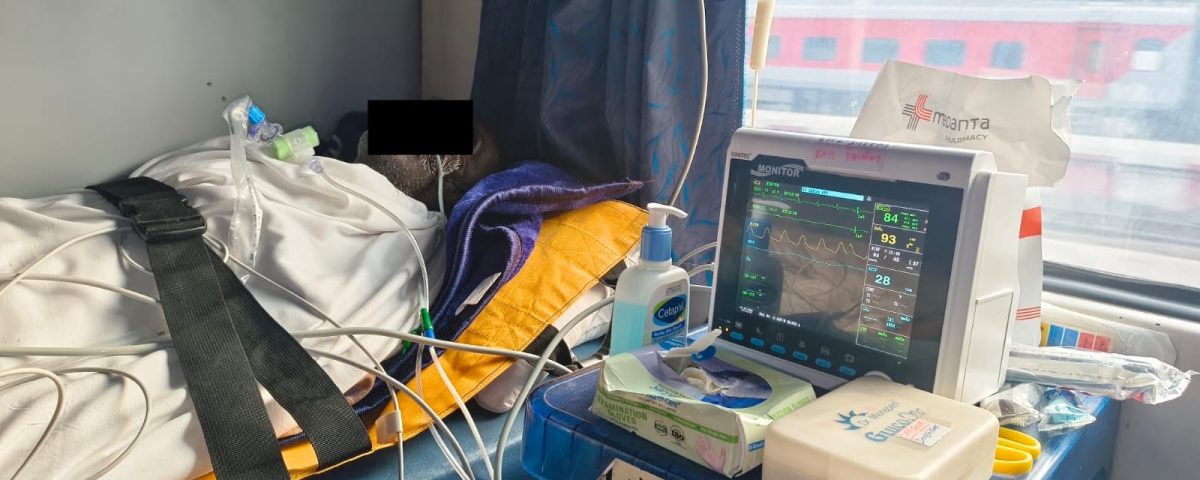
- Multiparameter monitoring for vital signs
- Emergency medications and airway management equipment
The patient was accompanied by an ICU doctor and a trained paramedic from Life Savers.
Care During Transit
During the Delhi to Ranchi journey:
- Oxygen therapy was maintained at 3 L/min
- Frequent suctioning was performed every 30 minutes to manage secretions
- Vital parameters were continuously monitored
- Positioning and supportive care were provided to maintain comfort
The patient remained stable throughout the journey without any acute complications.
Arrival and Handover
On arrival in Ranchi, the patient was safely handed over to the receiving medical team with a detailed clinical briefing, including oxygen requirements and suctioning frequency.
Clinical Perspective
Patients with advanced metastatic cancer and respiratory compromise require meticulous airway management during long-distance transport. Regular suctioning, oxygen therapy, and trained supervision are essential to prevent complications.
This case highlights the importance of structured planning and experienced teams in ICU Rail Ambulance transfers. Life Savers Ambulance Services continues to provide safe, clinically appropriate, and dignified transport solutions for high-dependency patients across India.