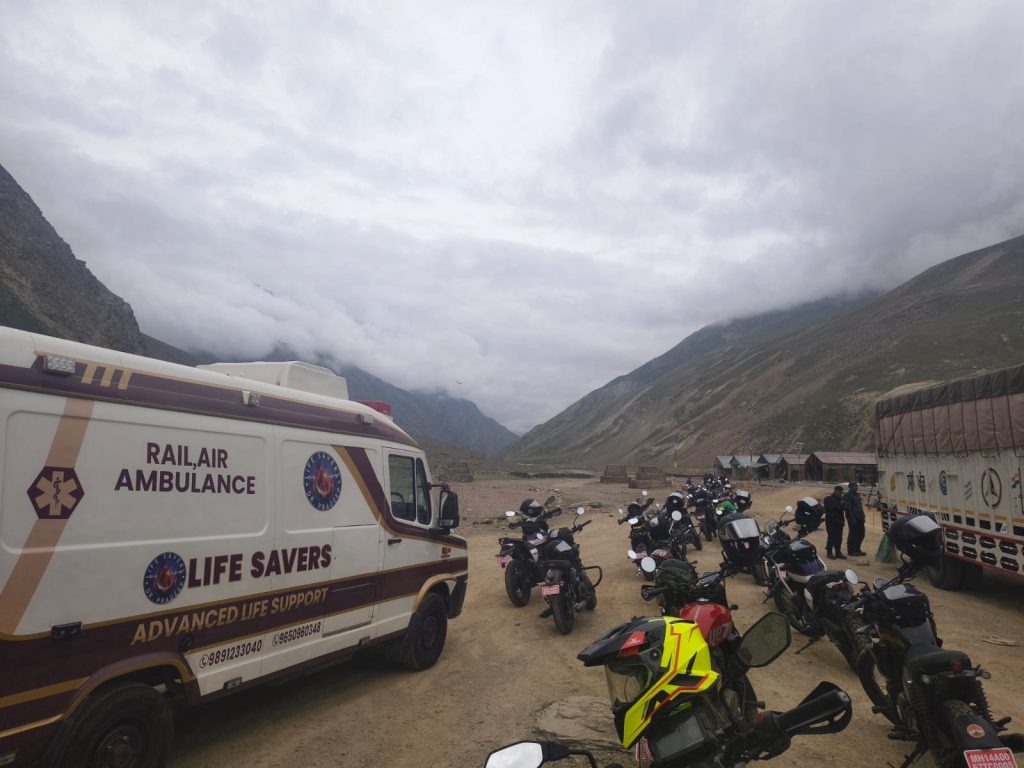
Critical Rail Ambulance Transfer from Hyderabad to Delhi: Successfully Transporting a Post Liver Transplant Patient on Ventilator Support
When every passing hour can determine a patient's survival, medical transportation becomes much more than a journey. It becomes an extension of the ICU itself.
Lifesavers Ambulance Services recently completed one of its most challenging rail ambulance transfers from Hyderabad to Delhi, safely transporting a 50 year old female patient who was just 12 days post liver transplant and had developed severe complications, placing her in an extremely critical condition.
This transfer demanded uninterrupted intensive care throughout the journey and showcased how a well coordinated ICU train ambulance can bridge the gap between two advanced healthcare centres.
Patient Overview
Age: 50 Years
Gender: Female
Diagnosis: Non Alcoholic Steatohepatitis (NASH)
Condition: Post Liver Transplant Day 12
Complications:
- Suspected Septicemia
- Ventilator Dependent
- Hemodynamically Unstable
- Low Dose Noradrenaline (NORAD) Support
The patient's condition had deteriorated following her liver transplant, making continuous critical care essential during transportation.
Her treating doctors recommended shifting her to Sir Ganga Ram Hospital, Delhi, for advanced multidisciplinary management.
Hospital to Hospital Transfer
Referring Hospital: Kamineni Hospital, Hyderabad
Receiving Hospital: Sir Ganga Ram Hospital, Delhi
Since the patient required uninterrupted ventilatory support and vasopressor infusion, commercial travel was not a suitable option. A fully equipped rail ambulance from Hyderabad to Delhi was planned after extensive coordination between both hospitals.
Challenges During the Transfer
Transporting a critically ill liver transplant patient involves multiple clinical risks, including:
- Sudden fall in blood pressure due to septicemia
- Risk of ventilator related complications
- Continuous monitoring of oxygenation
- Maintaining vasopressor infusion throughout the journey
- Preventing infection during long distance transfer
- Monitoring post transplant physiological changes
Every aspect of the transfer was planned meticulously to ensure there was no interruption in critical care.
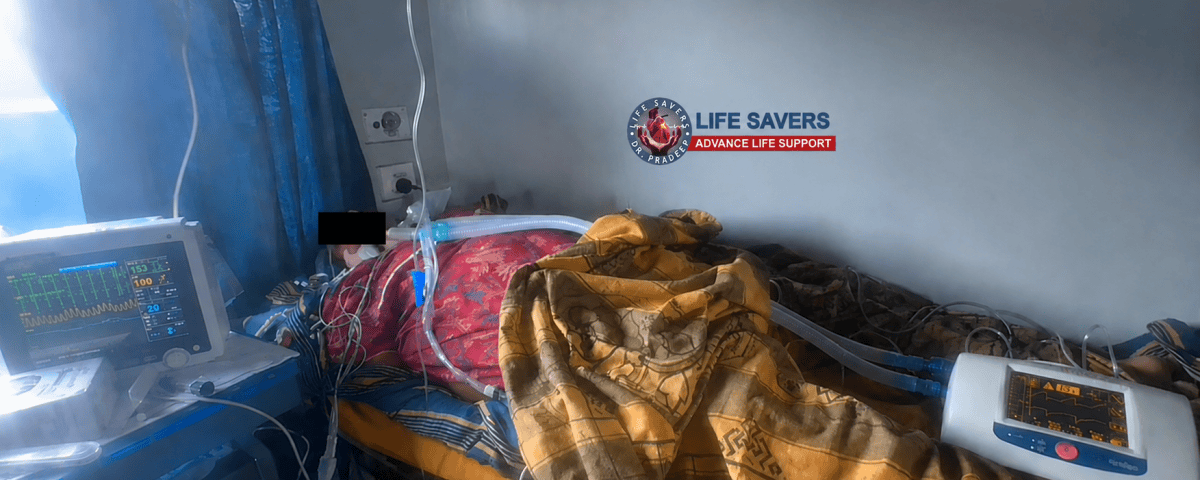
ICU Setup Inside the Rail Ambulance
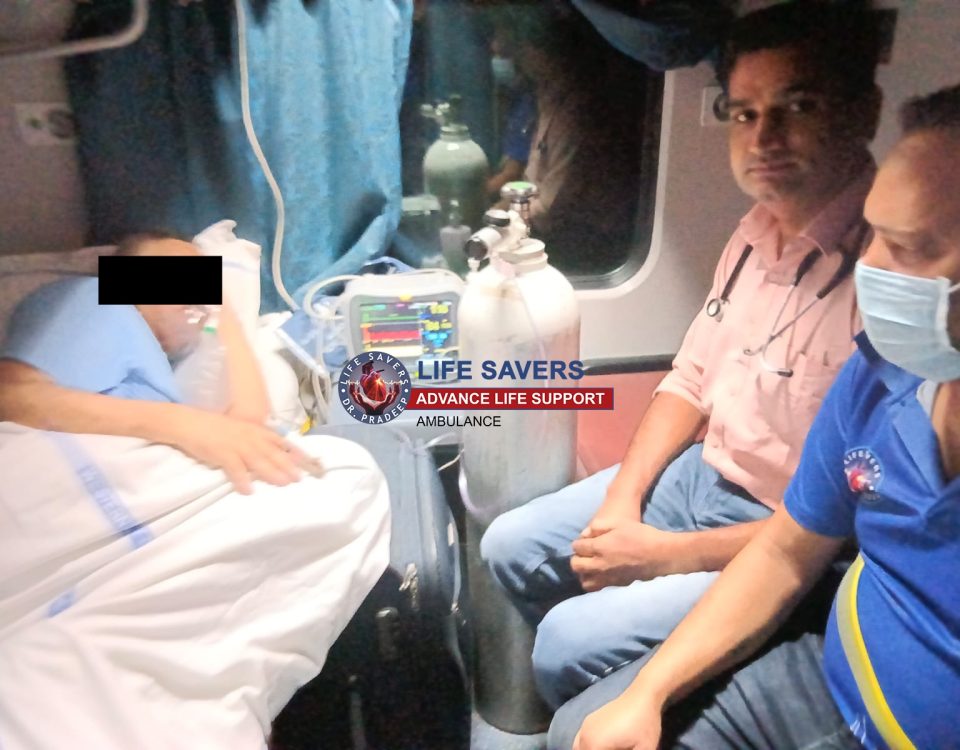
The railway ambulance functioned as a fully equipped mobile ICU.
Advanced life support equipment included:
- ICU Grade Ventilator
- Multiparameter Cardiac Monitor
- Syringe and Infusion Pumps
- Oxygen Support System
- Suction Apparatus
- Emergency Airway Equipment
- Defibrillator
- Emergency Medications
- Continuous NORAD Infusion Management
The objective was to replicate intensive care conditions throughout the journey.
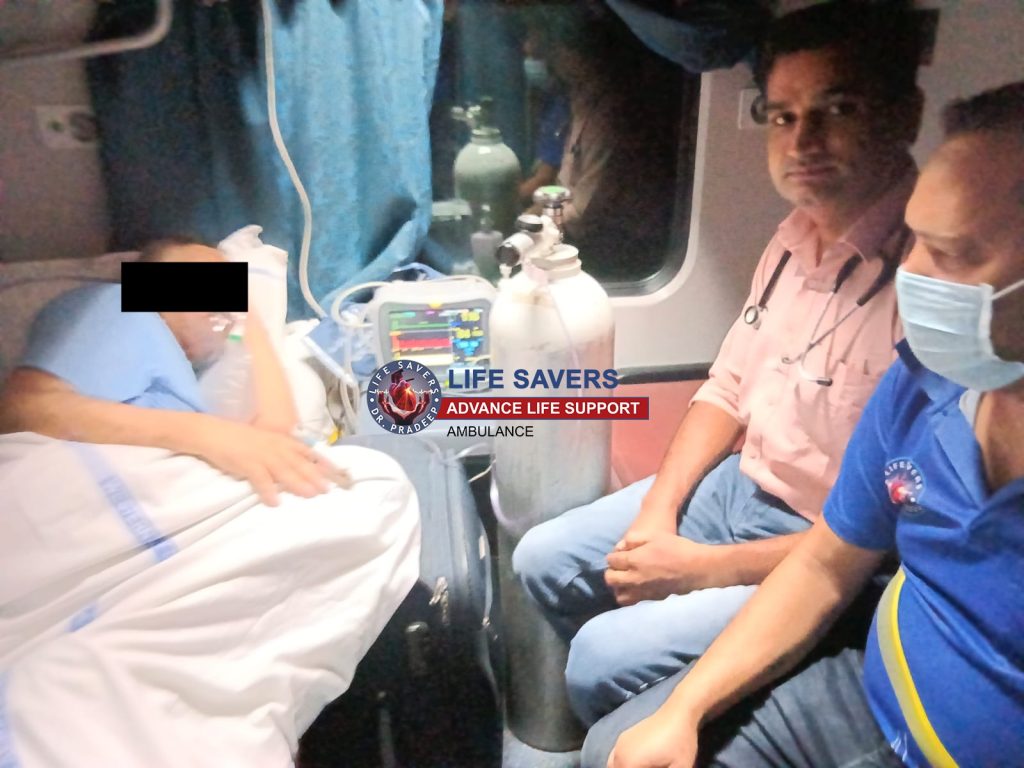
Expert Critical Care Team on Board
Considering the complexity of the patient's condition, Lifesavers Ambulance Services deployed
a dedicated critical care team consisting of:
- Critical Care Doctor
- Trained Critical Care Paramedic
- Experienced Male ICU Nurse
The medical team continuously monitored:
- Blood Pressure
- Heart Rate
- Oxygen Saturation
- Ventilator Parameters
- Urine Output
- Level of Consciousness
- Vasopressor Requirements
- Overall Hemodynamic Stability
Regular communication was maintained with both the referring and receiving medical teams throughout the transfer.
Why Rail Ambulance Was the Right Choice
For patients requiring prolonged intensive care over long distances, rail ambulance services offer several advantages:
- Stable environment for critically ill patients
- Continuous ICU level monitoring
- Reduced logistical challenges
- Cost effective compared to air ambulance in suitable cases
- Ability to accommodate a complete medical team and advanced life support equipment
- Comfortable transport for long duration critical care
For this patient, the train ambulance provided the safest and most clinically appropriate mode of transport.
Successful Transfer to Delhi
Despite being on ventilator support and requiring continuous low dose Noradrenaline infusion, the patient remained clinically stable throughout the journey.
Upon arrival in Delhi, she was transferred seamlessly from the railway ambulance to the ICU team at Sir Ganga Ram Hospital, ensuring continuity of care without interruption.
The coordinated efforts of both hospitals and the Lifesavers critical care team played a vital role in the successful completion of this high risk medical transfer.
Why Choose Lifesavers Ambulance Services for Rail Ambulance Transfers?
Lifesavers Ambulance Services specializes in ICU railway ambulance services across India,
handling some of the country's most complex patient transfers.
- Our services include:
- ICU Train Ambulance
- Ventilator Patient Transfer
- Liver Transplant Patient Transport
- Cardiac Patient Transfer
- Neurological Emergency Transport
- Neonatal and Pediatric Transfers
- Air Ambulance Services
- Bed to Bed Medical Transfer
- Doctor and Critical Care Team Escort
Unlike many providers, Lifesavers manages its operations with an in house medical team and equipment, ensuring standardized quality, faster response times, and customized care for every patient.
Conclusion
Transporting a patient who is only 12 days post liver transplant, battling suspected
septicemia, dependent on a ventilator, and requiring continuous NORAD support is a task
that demands exceptional planning, experienced clinicians, and advanced life support systems.
This successful rail ambulance transfer from Hyderabad to Delhi reflects Lifesavers Ambulance Services' commitment to delivering ICU level medical care beyond hospital walls, ensuring that even the most critically ill patients can safely reach the specialized treatment they need.