A Complex Air Ambulance Transfer From Delhi to Siliguri

In critical care medicine, there are moments when every decision matters, every second counts, and every member of the medical team must perform with absolute precision. The complex air ambulance transfer are among the most demanding aspects of emergency healthcare because they require transporting an intensive care unit into the sky.
Recently, our team at Life Savers Ambulance Services successfully completed one such challenging mission—transporting a critically ill patient from Rajiv Gandhi Cancer Institute, New Delhi to Siliguri, West Bengal.
The Patient's Clinical Condition
The patient was a 62-year-old female recovering from a Whipple's (Pancreaticoduodenectomy) surgery, one of the most complex abdominal surgeries performed for pancreatic and periampullary diseases.
Her post-operative recovery was complicated by several critical factors:
- Dependence on continuous mechanical ventilation.
- A tracheostomy requiring meticulous airway management.
- Recurrent episodes of severe hypoglycemia.
- Continuous infusion of 25% dextrose to maintain stable blood glucose levels throughout the journey.
These conditions meant that the patient could not tolerate any interruption in critical care. Even a brief lapse in monitoring or medication could have resulted in a life-threatening emergency.
Planning Before Takeoff
A complex air ambulance transfer mission begins long before the aircraft leaves the ground.
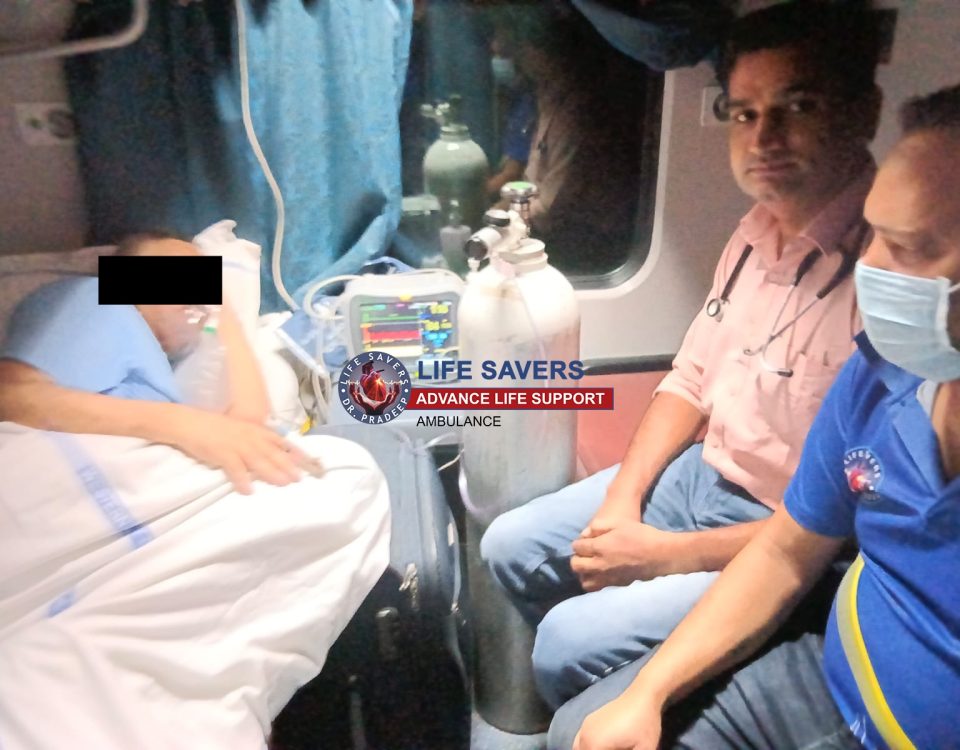
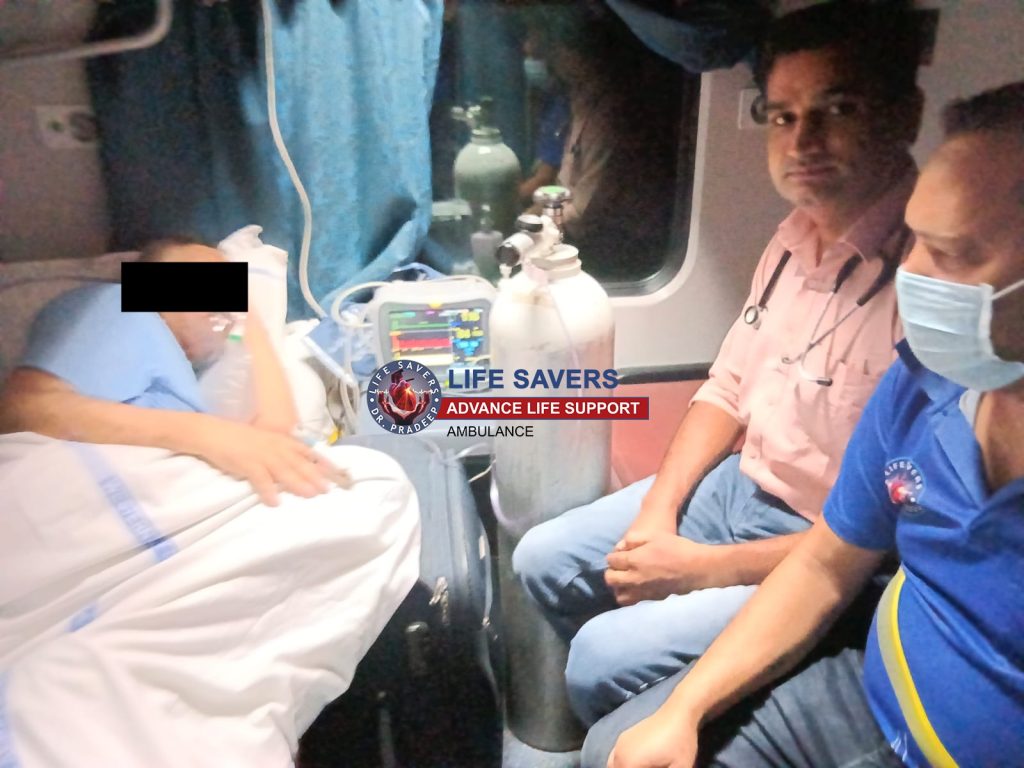
Our medical team carefully reviewed the patient's clinical records, current ventilator settings, medication requirements, laboratory parameters, and overall stability. Equipment redundancy was ensured, including backup oxygen supplies, ventilator systems, infusion pumps, airway equipment, emergency medications, and continuous patient monitoring devices.
Every detail was planned to recreate an ICU environment inside the aircraft.
The Journey
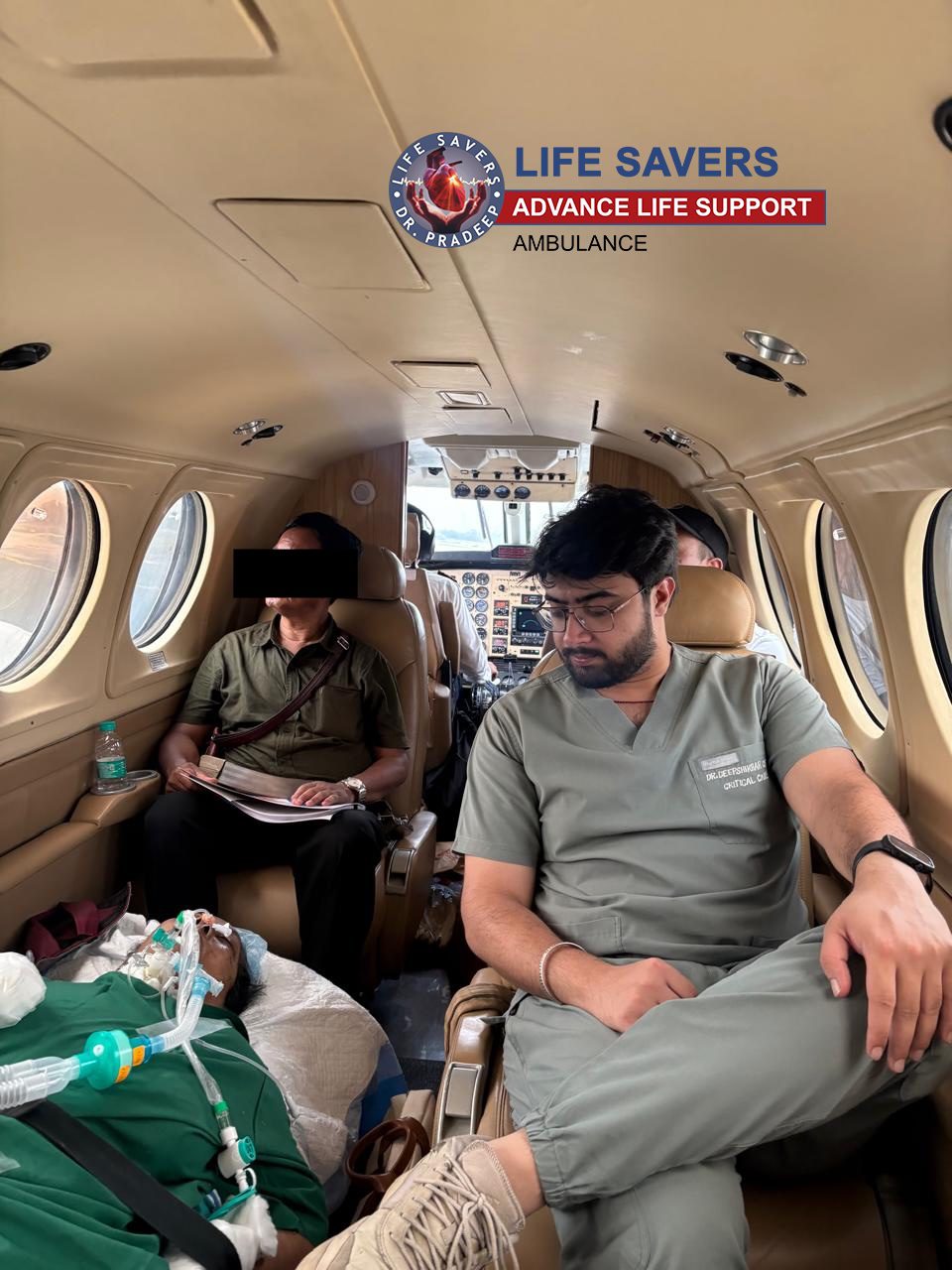
I personally accompanied the patient during this complex air ambulance transfer from Delhi. Throughout the flight, our focus remained on maintaining physiological stability. Continuous ventilator support was carefully monitored while ensuring adequate oxygenation and ventilation. Simultaneously, the patient's blood glucose levels required close observation because of her recurrent hypoglycemic episodes, with uninterrupted administration of concentrated dextrose infusion. Transporting a patient with multiple critical care requirements is never a routine transfer. Changes in altitude, vibration, limited workspace, and the inability to access hospital resources demand constant vigilance and clinical expertise. Behind what appears to be a straightforward flight lies continuous assessment, rapid decision-making, and seamless coordination between the medical crew, aviation team, and receiving hospital.
A Successful Mission
The patient was safely transported to Siliguri, where she was handed over to the receiving medical team for continued care.
Every successful critical care transfer is the result of meticulous planning, experienced professionals, and teamwork. While the destination is important, the true success lies in ensuring that the patient's condition remains stable throughout every stage of the journey.
Why Critical Care Transport Matters
Patients requiring ventilators, advanced airway management, vasoactive medications, or continuous infusions cannot be treated as ordinary transfers. They require a mobile ICU staffed by experienced critical care professionals capable of managing emergencies anywhere, including at 30,000 feet.
At Life Savers Ambulance Services, every mission is guided by one principle:
Distance should never become a barrier to receiving quality medical care. Whether the journey is across a city or across the country, our commitment remains the same—to provide safe, compassionate, and evidence-based critical care transport for every patient.