
Written by: Life Savers Ambulance Service Medical Team
Medically Reviewed by: Dr. Deepshikhar Gupta, MBBS (Critical Care), Medical Director, Life Savers Ambulance Service
Gurgaon Air Transfer at a Glance
An air ambulance request from Gurgaon usually begins with an ICU road transfer to Indira Gandhi International Airport, followed by the medical flight and another ambulance at the destination. Life Savers Ambulance Service coordinates requests 24/7 for dedicated charter aircraft and, for medically stable patients, scheduled flights with a doctor or nurse escort.
Selected ventilator-dependent patients may travel after a clinical review and case-specific preparation. To start planning, share three essentials: the patient’s exact pickup location, present medical condition and intended destination.
An air ambulance is a medically supported patient transfer arranged using a dedicated aircraft or, for suitable stable patients, a scheduled flight with an appropriate medical escort.
For a family in Gurgaon, the important question is not simply how quickly an aircraft can depart. The real question is whether the patient can remain appropriately supported from the current bed to the receiving bed.
That complete journey may involve a hospital discharge, movement through city traffic, airport handling, transfer into the aircraft, in-flight care and a clinical handover after landing. A safe plan must connect all of these parts.
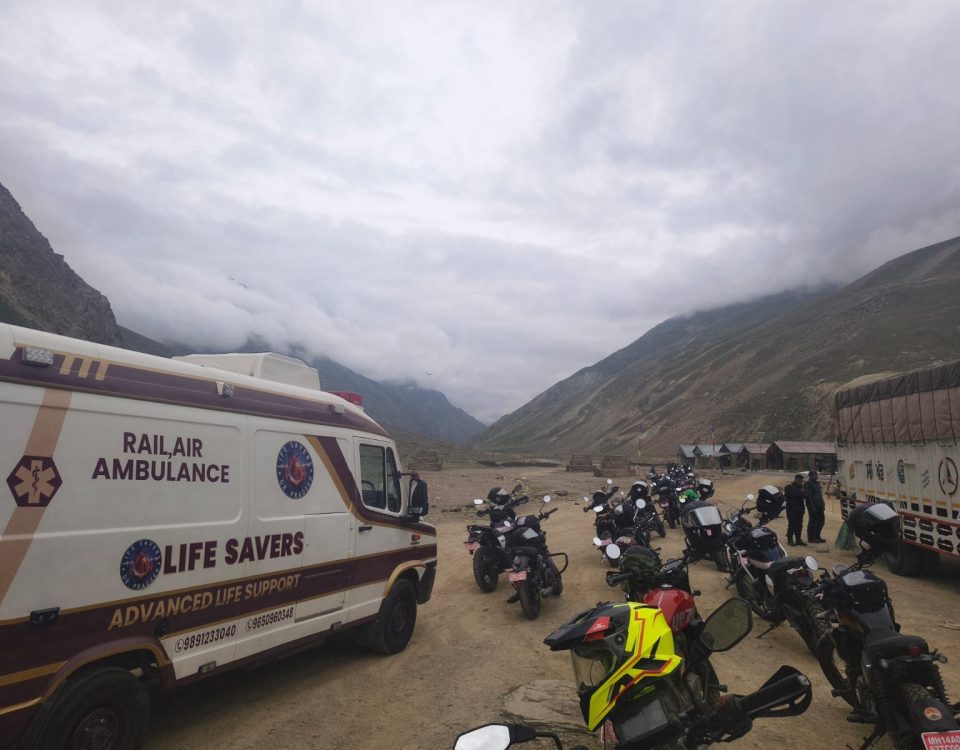
Life Savers Ambulance Service coordinates domestic and international patient transfers from Gurgaon, also officially known as Gurugram. Depending on the case, the suitable arrangement may be a dedicated medical charter, a commercial flight with a medical escort, an ICU road ambulance, a rail ambulance or a combination of transport methods.
Start With the Whole Route, Not Only the Aircraft
Gurgaon does not have a separate airport normally used for scheduled medical flights. Air ambulance transfers serving the city generally use Indira Gandhi International Airport in Delhi.
This makes the Gurgaon-to-airport road journey part of the medical mission, not a separate taxi-style transfer.
Before an aircraft is selected, four parts of the journey should be understood:
| Part of the journey | What must be confirmed | Gurgaon-specific consideration |
| Current hospital or residence | Patient readiness, discharge, access and safe movement to the ambulance | The pickup may be in a hospital corridor, high-rise residence or a location with restricted ambulance access |
| Gurgaon to IGI Airport | Ambulance type, travel margin, oxygen supply and airport reporting point | Traffic, peak office hours, roadworks and heavy rain can change the practical travel time |
| Medical flight | Aircraft or airline approval, medical team, equipment, oxygen and patient position | Charter and commercial transfers use different airport processes |
| Destination airport to hospital | Receiving ambulance, bed confirmation and clinical handover | The destination ground team should be ready before the flight departs |
A short flight does not automatically mean a short transfer. Ground travel, airport procedures and patient movement can account for a substantial part of the total journey.
Which Transfer Pathway Fits the Patient?
There are three broad ways to arrange a medically supported long-distance journey from Gurgaon. The correct pathway depends on the patient’s condition, not only the family’s preferred aircraft or budget.
| Transfer pathway | Usually considered when | Important limitations |
| Dedicated medical charter | The patient is critically ill, ventilator-dependent, needs substantial oxygen, requires continuous infusions or cannot be accommodated on a passenger flight | Higher cost; aircraft, crew, airport and route availability must be confirmed |
| Scheduled flight with | The patient is clinically stable but needs a doctor, nurse, wheelchair, approved oxygen, | Airline medical clearance, flight schedule and |
| ICU road, rail or multimodal transfer | The route is short enough for road travel, the patient is stable enough for rail, or a combination offers a more practical journey | Travel time, route conditions, ticket availability and continuous medical support must be assessed |
Choosing the costliest aircraft is not a clinical decision. The safer option is the one that meets the patient’s actual needs with the least unnecessary complexity.
Dedicated Charter Air Ambulance From Gurgaon
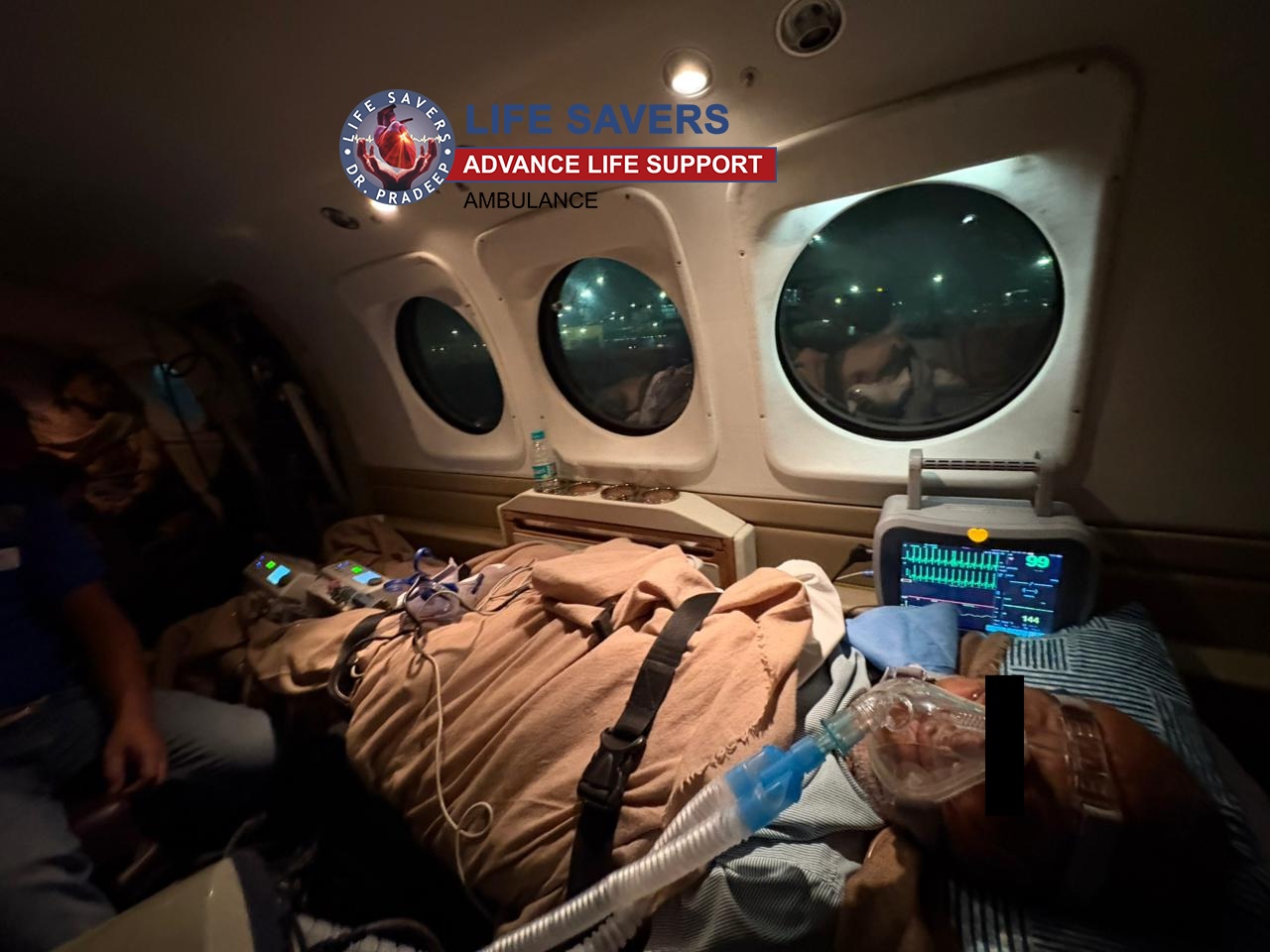
A charter air ambulance is a dedicated aircraft prepared for one patient’s transfer. The medical configuration is planned after reviewing the diagnosis, stability, oxygen use, ventilator settings, medicines, required position and expected risks.
It may be appropriate when a patient needs intensive monitoring, mechanical ventilation, multiple infusions, restricted movement or a level of care that cannot be safely managed on a scheduled passenger flight.
The patient is normally collected from the Gurgaon hospital or residence in an appropriately equipped ground ambulance and taken to the designated charter handling point at IGI Airport.
Commercial Flight With a Medical Escort
A medically stable patient may be able to travel on a scheduled airline with a doctor, nurse or another suitable medical escort. Depending on airline approval, the plan may include wheelchair assistance, additional seating, an approved portable oxygen concentrator, airline oxygen or a stretcher arrangement on routes where that service is offered.
This can be more economical than chartering an aircraft, but it requires advance coordination. The airline may request a Medical Information Form, recent reports or confirmation from the treating doctor. Equipment, batteries, oxygen devices and medicines must comply with airline rules.
When Road or Rail May Be More Sensible
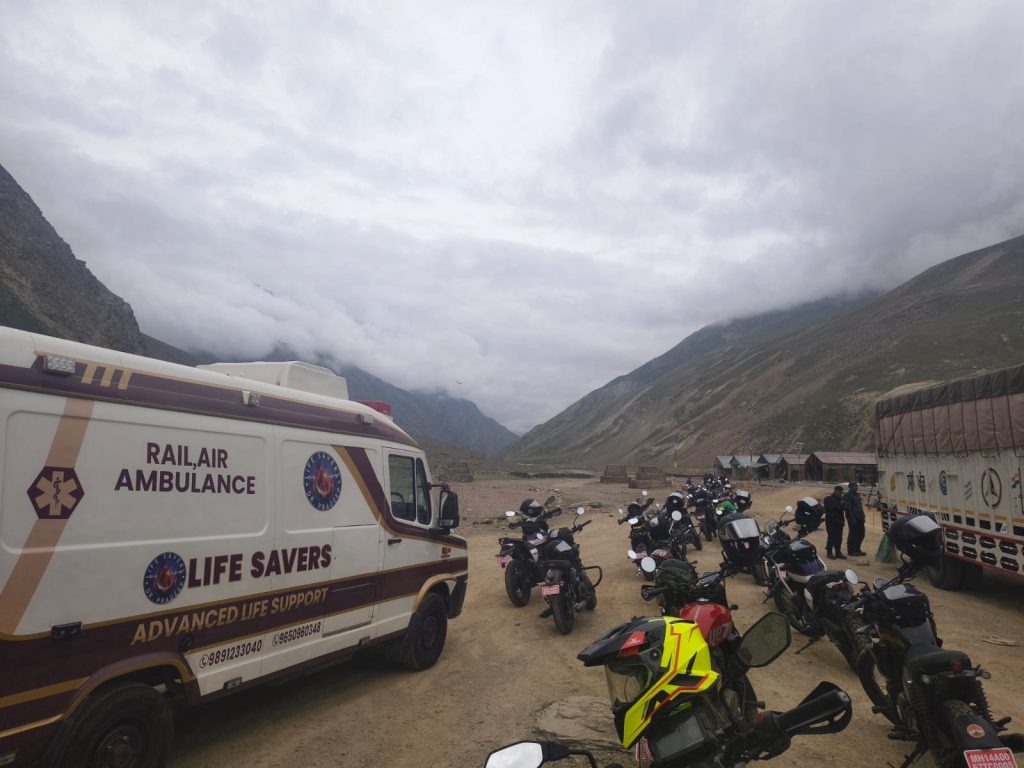
For Gurgaon-to-Delhi, Gurgaon-to-Noida, Gurgaon-to-Faridabad and some other NCR transfers, an ICU road ambulance is usually more practical than adding an airport and flight stage.
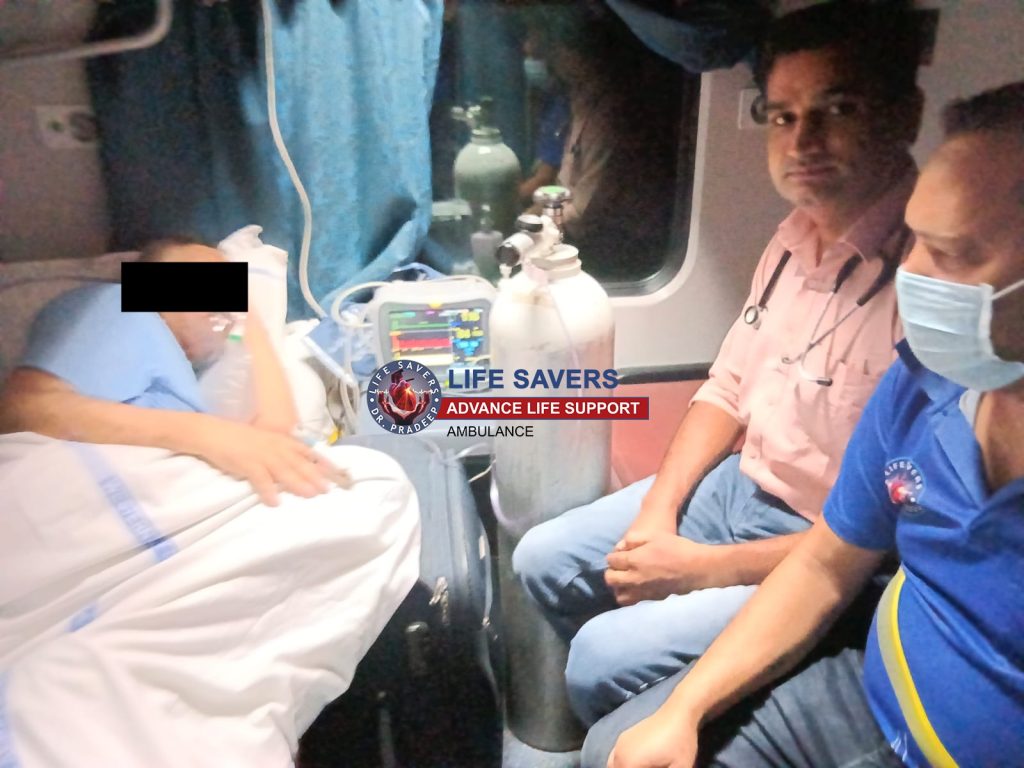
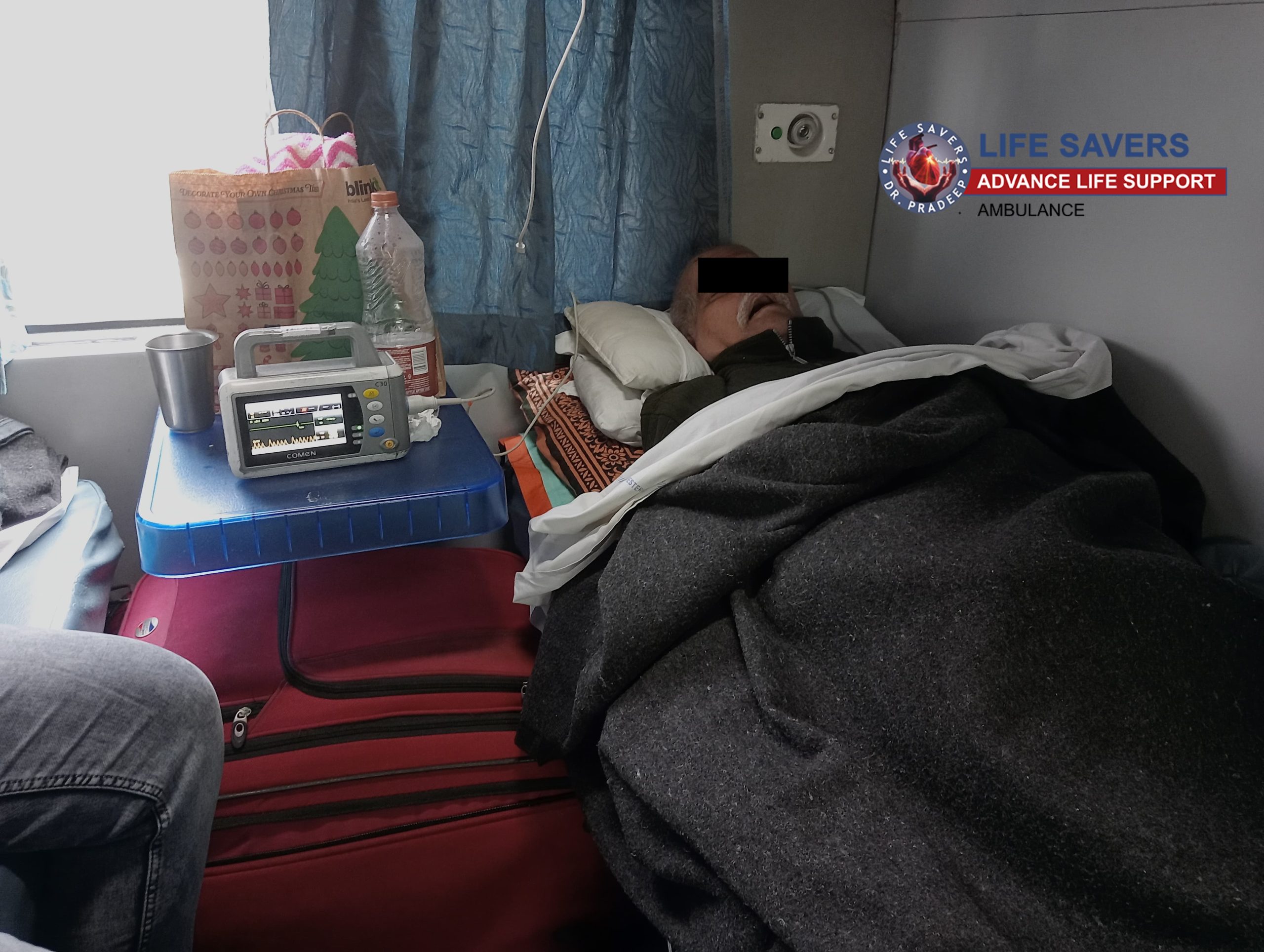
For selected stable patients travelling longer distances, rail transport may be considered when the route, berth arrangements, journey duration and medical support are suitable. In other situations, a combined ground and air plan may offer the best balance.
The Clinical Go or No-Go Review
Air travel should be assessed as a medical transport decision, not treated like an ordinary booking. A patient who appears stable while resting in an ICU may respond differently during movement, ambulance travel, aircraft loading or changes in cabin pressure.
The review may consider four clinical areas.
Breathing and Oxygen
The team may review the airway, oxygen delivery method, recent oxygen levels, ventilator mode, ventilator settings, secretion management and the possibility of deterioration.
For a ventilator air ambulance from Gurgaon, oxygen must be calculated for the entire trip. The calculation should include the Gurgaon ambulance, airport waiting time, the flight, the destination ambulance and a suitable reserve for delays.
Blood Pressure, Heart Rhythm and Infusions
Recent vital signs, cardiac rhythm, vascular access, current medicines and continuous infusions may influence the required monitoring, pumps and medical team.
Positioning and Patient Movement
The team should understand whether the patient can sit, must remain flat, has spinal precautions, is unable to tolerate transfers or requires specialised positioning. Moving between a hospital bed, ambulance stretcher and aircraft can be one of the more demanding parts of the journey.
Readiness at the Receiving End
A patient should not be moved towards an unconfirmed hospital bed. The receiving facility, treating unit and handover plan should be clear whenever admission forms part of the transfer.
Selected ventilator-dependent patients may be transported when a clinical assessment confirms suitability and the required ventilation, oxygen, monitoring, medicines, medical team and backup arrangements are available. No ventilated patient should be accepted through a blanket promise.
Bed-to-Bed Transfer Means Managing Four Handover Points
The phrase bed-to-bed transfer is sometimes used as if it only means providing two ambulances. In practice, it means preserving medical continuity through four separate handovers:
- From the hospital or residence to the Gurgaon ground ambulance.
- From the ground ambulance to the aircraft or scheduled flight arrangement.
- From the aircraft to the destination ground ambulance.
- From the destination ambulance to the receiving medical team.
At every transition, oxygen, ventilation, infusions, monitoring, equipment power, patient position and medical information must remain accounted for.
Life Savers Ambulance Service may coordinate the referring facility, ground teams, airport arrangements, medical flight and receiving hospital as one connected transfer. This reduces the risk of the family having to manage separate providers who do not share the same timeline or clinical information.
What LifeSavers Coordinates Behind the Journey
The visible part of an air ambulance is the aircraft. Much of the work happens before the patient reaches it.
Depending on the case, coordination may include:
- Reviewing the medical summary and current treatment.
- Speaking with the treating team when clarification is required.
- Identifying whether charter, commercial, road, rail or combined travel is appropriate.
- Selecting medical professionals according to the patient’s expected needs.
- Planning oxygen, equipment, medicines and power backup.
- Arranging ground ambulances at the origin and destination.
- Confirming airport, aircraft or airline procedures.
- Aligning the departure with hospital discharge and destination readiness.
- Monitoring the patient during the transfer.
- Providing a clinical handover at the destination.
Life Savers Ambulance Service brings more than two decades of medical transport experience to this coordination. The medical plan remains case-specific because two patients travelling on the same route may need completely different support.
Why the Gurgaon-to-IGI Road Leg Needs Its Own Plan
The practical route to IGI Airport depends on where the patient is located. A pickup from Palam Vihar is different from one in Sector 38, Golf Course Road, Sohna Road, New Gurugram or Manesar.
NH-48 may be suitable for many transfers, while the Dwarka Expressway corridor may be relevant for some western and newer sectors. The route should be selected using current conditions rather than a fixed assumption.
Peak office traffic can slow movement around major business and interchange areas. During heavy monsoon rain, waterlogging and temporary congestion may affect internal roads, underpasses and airport access corridors. For a medically dependent patient, the plan should include a realistic margin without causing an unnecessarily early or tiring transfer.
The airport destination must also be exact. A charter handling area and a scheduled airline terminal have different entry, documentation and reporting requirements.
Gurgaon Hospitals and Pickup Areas
Patient transfers may be coordinated from hospitals, nursing facilities, rehabilitation centres and residences across Gurgaon.
Common hospital pickup or destination enquiries may involve:
Coverage may also be assessed for DLF phases, Cyber City, MG Road, Sushant Lok, Golf Course Road, Golf Course Extension Road, Sohna Road, Palam Vihar, Dwarka Expressway sectors, New Gurugram and Manesar.
Requests may originate farther away in Sohna, Pataudi, Farrukhnagar, Nuh, Rewari, Dharuhera, Bhiwadi or Neemrana. These locations add a longer ground stage, so the team should compare direct ICU road transport with transfer to IGI Airport before recommending an aircraft.
How Different Gurgaon Cases May Be Planned
The examples below explain the decision process. They are illustrative and do not replace an individual medical assessment.
A Ventilated ICU Patient Travelling to a Distant Hospital
A ventilated patient in a Gurgaon ICU who must reach Chennai, Mumbai or another distant treatment centre may require a dedicated charter. Planning would focus on stability, ventilator
settings, oxygen endurance, infusions, ambulance-to-aircraft movement and confirmation of the destination ICU.
A Stable Patient Recovering After Surgery
A stable post-operative patient who cannot travel independently may be considered for a scheduled flight with a medical escort. The airline, seating, mobility and oxygen requirements would need approval before travel.
A Patient Moving Within Delhi NCR
For a transfer from Gurgaon to a Delhi, Noida or Faridabad hospital, an ICU road ambulance may avoid the extra handling involved in airport travel. Air transport would rarely add practical value for such a short route.
A Patient Arriving From Abroad for Treatment in Gurgaon
The flight may arrive at IGI Airport, where an appropriately equipped ground ambulance receives the patient and continues to the confirmed Gurgaon hospital. Immigration, medical documents, airport assistance and hospital admission must be aligned.
A Patient Located in Manesar, Sohna or Nuh
The added road distance to IGI Airport matters. The fastest-looking flight may not produce the shortest or safest complete journey. Direct road transfer, stabilisation in Gurgaon or a road-air combination should be compared.
Medical Support Is Built Around the Patient
There is no standard equipment package suitable for every mission.
| Patient requirement | Support that may be planned |
| Mechanical ventilation | Transport ventilator, calculated oxygen supply, airway equipment, suction and backup ventilation |
| Continuous oxygen | Appropriate oxygen source, delivery device, monitoring and reserve calculation |
| Cardiac or vital-sign monitoring | Multiparameter monitor, ECG capability, blood pressure and oxygen saturation monitoring |
| Medicines and infusions | Syringe pumps, infusion pumps, secure vascular access and required medicines |
| Risk of acute deterioration | Defibrillator, resuscitation equipment, emergency medicines and a suitable clinician |
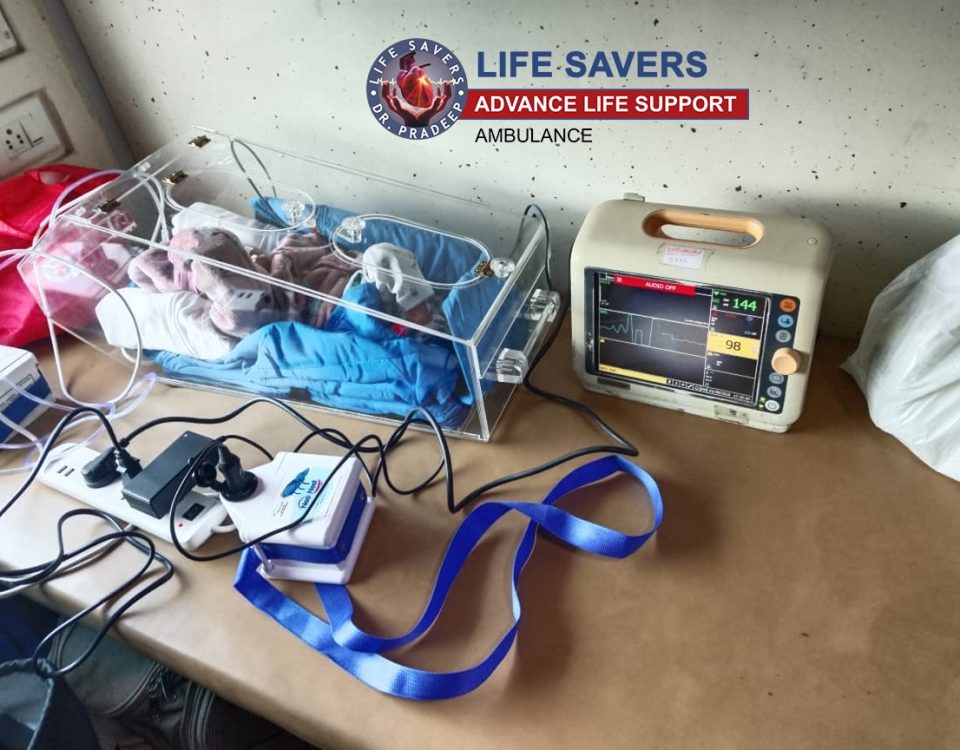
| Neonatal or paediatric transfer | Age-appropriate ventilator, incubator where required, monitoring, pumps and trained professionals |
| Restricted movement or trauma | Suitable stretcher, immobilisation and case-specific positioning support |
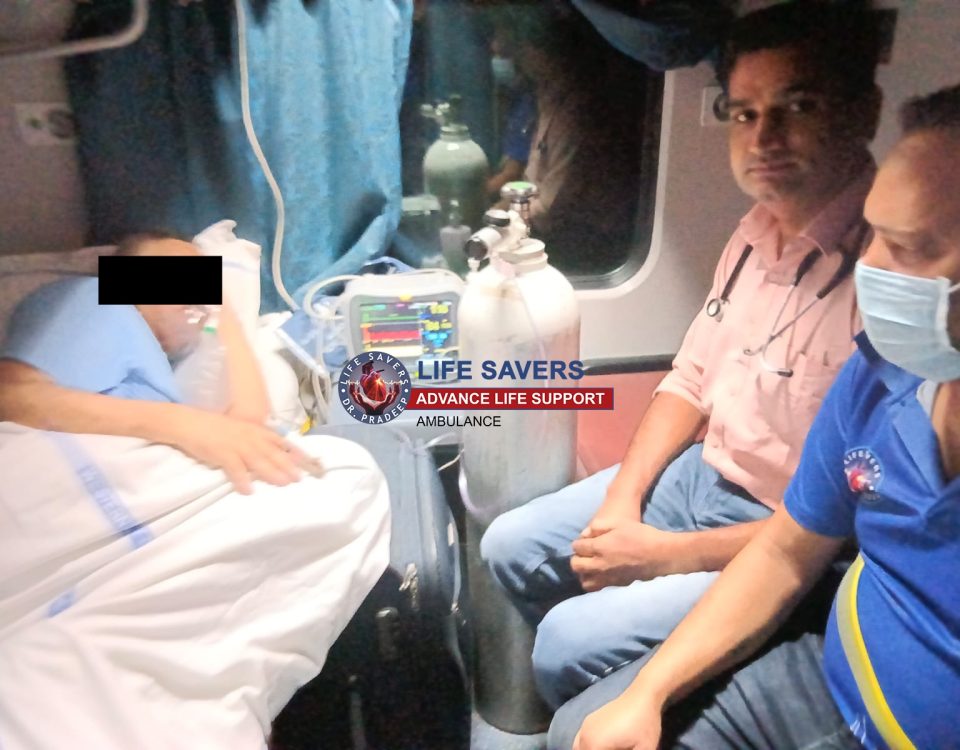
The accompanying team may include a critical care doctor, emergency physician, anaesthesiologist, critical care nurse, flight nurse, paramedic, emergency medical technician or a neonatal or paediatric professional.
Not every patient needs every specialist. The team should be selected according to what may reasonably be required during that particular journey.
Domestic, Inbound and International Transfers
Air ambulance enquiries from Gurgaon commonly involve long-distance connections with cities such as Mumbai, Hyderabad, Chennai, Bengaluru, Kolkata, Lucknow, Patna, Guwahati, Ahmedabad and Pune. Operational feasibility depends on aircraft availability, airport access, route conditions and the patient’s medical needs.
Gurgaon is also a destination. Patients may arrive through IGI Airport for treatment at a Gurgaon hospital, after which the final road stage is completed with suitable medical support.
International transfers may involve a dedicated charter, a commercial medical escort or an airline stretcher where available. Additional planning may be required for passports, visas, airline clearance, immigration, route permissions, medical documents and hospital acceptance.
Medical evacuation and medical repatriation are not identical. Evacuation generally moves a patient to a place where suitable care can be accessed. Repatriation usually helps a medically suitable patient return to their home country, home city or usual healthcare system.
How Air Ambulance Cost in Gurgaon Is Calculated
There is no medically meaningful single price for every Gurgaon air ambulance request. A quotation is usually built from four groups of requirements.
- Air Travel
This may include the charter aircraft, flight time, aircraft positioning, crew, airport handling and route requirements. For a commercial transfer, it may include airline tickets, additional seats, a stretcher arrangement or other approved assistance.
- Medical Care
The patient’s condition determines the medical team, oxygen, ventilator, monitoring, medicines, pumps and any specialised equipment.
- Ground Movement
The estimate may include the ambulance from Gurgaon to IGI Airport and another ambulance from the destination airport to the receiving hospital.
- Operational Requirements
Domestic or international documentation, airport procedures, permissions, waiting time and other case-specific arrangements may affect the total.
A commercial medical escort for a stable patient and a dedicated ICU charter for a ventilated patient are different services, even if both are described online as an air ambulance.
When comparing air ambulance prices in Gurgaon, families should ask what the quotation includes. A lower figure may omit ground ambulances, oxygen, airport handling or medical equipment needed for the full journey.
What to Share Before You Book an Air Ambulance in Gurgaon
The first clinical review is faster when the information is complete. Keep the following details ready:
- Exact hospital, residence or pickup address.
- Destination city and receiving hospital, if selected.
- Diagnosis and reason for transfer.
- Current level of consciousness and stability.
- Oxygen delivery method and flow requirement.
- Ventilator mode and settings, where applicable.
- Blood pressure, heart rate and recent oxygen saturation.
- Medicines and continuous infusions.
- Mobility, positioning or isolation requirements.
- Recent medical summary and investigations.
- Treating doctor’s contact details, where available.
- Preferred timing and urgency.
After this information is reviewed, the family can receive a proposed transport pathway, medical plan, ground-air-ground route and case-specific estimate. Only after confirmation should the aircraft, airline, medical team, ambulances, airport and hospital arrangements be finalised.

Dr. Pradeep Gupta
Critical Care And Transportation Specialist
Current Handling Critical Care Ambulance services around the world, Founder And Chief Mentor at Life Savers, Start up in Train Ambulance on Ease of availability and Financial savvy.
Past Worked as Intensivist In Sir Ganga Ram Hospital(Delhi) for Many Years
Qualification MBBS, Diploma in Critical Care
Frequently Asked Questions
- Medanta - The Medicity, Sector 38.
- Fortis Memorial Research Institute, Sector 44.
- Artemis Hospital, Sector 51.
- Paras Health, Sector 43.
- Manipal Hospital, Palam Vihar.
- Other medical facilities across Gurgaon and nearby areas.